Between 2002 and 2021 the Afghan National Army wore donated woodland uniforms, a national pixelated pattern selected in 2007, and the woodland its Commandos kept to the end. The American procurement file explains why one army ended up with several patterns at once.
Monthly Archives: November 2026
From the subtropical monte of Misiones to the Patagonian steppe, Argentina has tried jungle prints, desert prints and one universal pattern. The history of its camouflage is a lesson in how procurement, not doctrine, decides.
Finland’s woodland camouflage did not begin with the M05. Two earlier issues, the M62 and the M91, carried the Finnish field uniform through four decades…
Iraq’s camouflage was never one pattern. Army, police, commandos and militias each ended up in their own, and no two formations look alike.
Colombia chose pixels in 2006 for a jungle war nobody expected to last that long, and that uniform is still being worn out, unit by unit.
Switzerland’s four colour TAZ 90 replaced Alpenflage in the 1990s and stayed in service for three decades. How the print was designed, how it is cut, and how to tell it from TAZ 83.
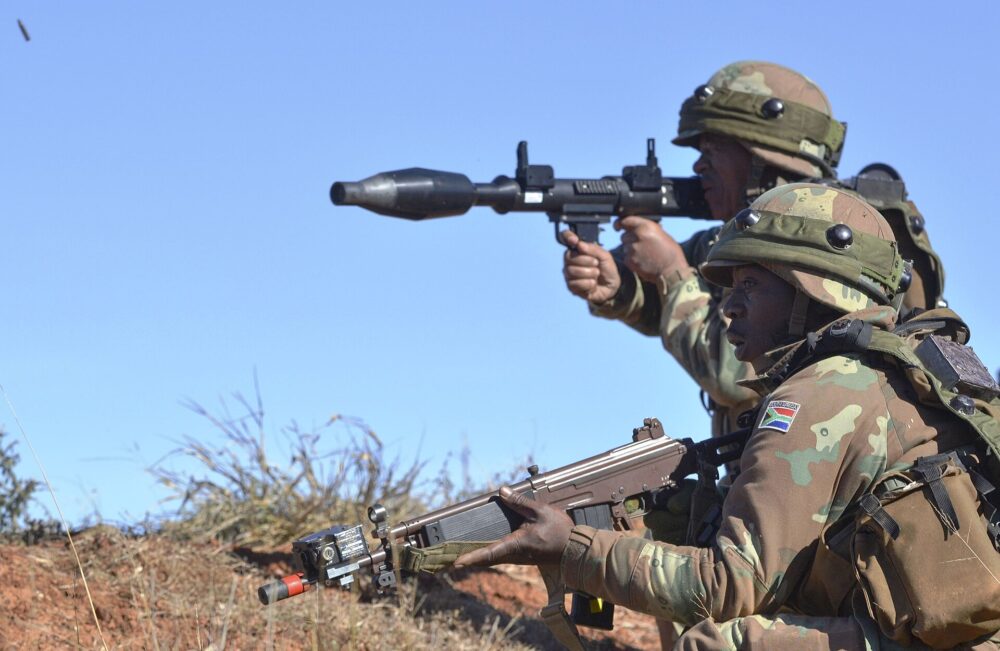
South Africa’s Soldier 2000 is a four-colour disruptive pattern built for the bushveld. How the SANDF pattern was designed, where it is worn, and how to identify a real garment.
From 2008 to 2019 the US Navy dressed its sailors in a blue, grey and black digital camouflage, the Navy Working Uniform Type I. It was designed to hide paint stains rather than people, and when sailors judged it as camouflage, the pattern lost the argument.
Iran copied British DPM from the 1970s and American spot patterns soon after, then built its own pixelated family from 2009 onwards. This is how two camouflage lineages ended up in service at the same time, across the Army and the Islamic Revolutionary Guard Corps.
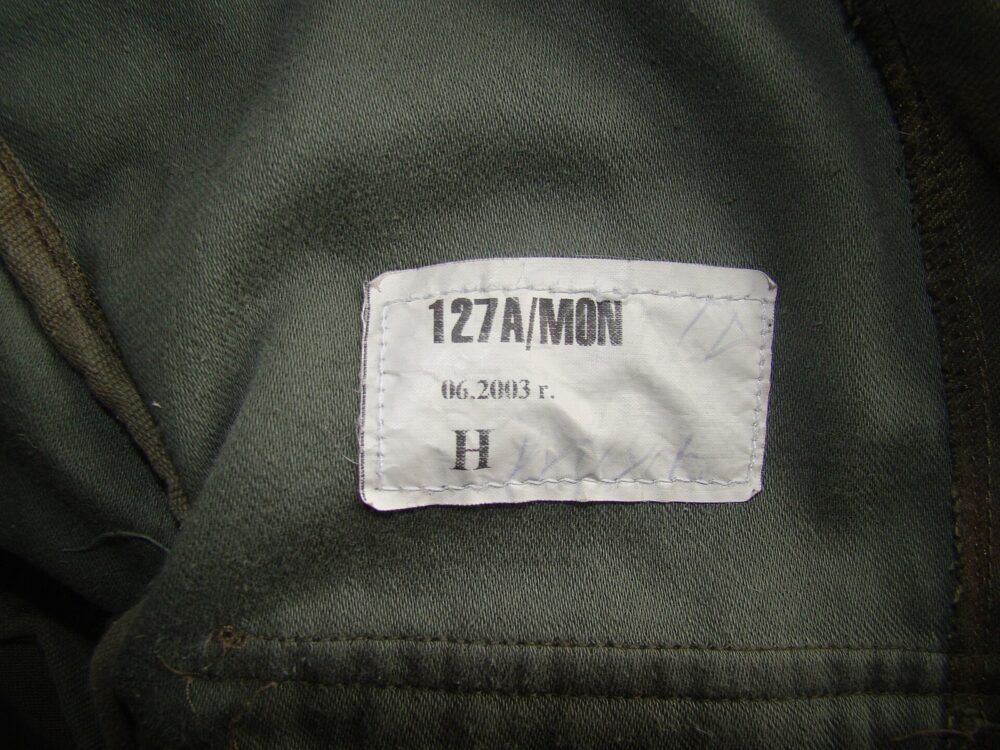
A label can carry the article name, a contract number, a size and a NATO Stock Number: six blocks on one piece of cloth, and the exception rather than the rule.
- 1
- 2