
wz. 93 Pantera: The Polish Panther That Survived Its Own Replacement
The Polish wz. 93 Pantera – a special-forces camouflage turned into a national uniform after a presidential appearance – has outlived its own replacement.

The stories behind the world’s military camouflage patterns — from German WWII and Soviet leaf to ERDL, UCP, MTP and today’s digital prints.
The Polish wz. 93 Pantera – a special-forces camouflage turned into a national uniform after a presidential appearance – has outlived its own replacement.

The parachute smock that carried brushstroke camouflage to the airborne forces: its three patterns, its makers, and the legend behind its name.

British DPM, Disruptive Pattern Material, clothed the British Army and its allies for nearly 50 years. This is the story of the four-colour temperate pattern and of the desert DPM Britain built but never wore.

The Chinese PLA Type 07, a six-colourway digital family fielded in 2007, and its replacement by the terrain-based Xingkong.

Desert Night Camouflage, the strange two-colour grid issued to US troops in the Gulf War. Why it exists, how it was designed to defeat Soviet night vision, and why it became obsolete.

Danish M84 Pletsløring, a three-colour Flecktarn-derived spot pattern that served the Danish army for over 30 years.

The full German World War II camouflage family – Splittertarn, Platanen, Rauchtarn, Sumpf, Erbsenmuster – and the myths that surround it.

Belgian jigsaw camouflage, the puzzle pattern used by the Belgian Army from 1956 to 2022. Design origin, generations (m/56, 1999, desert), African variants, and why Belgium switched to Multicam.

CADPAT, how Canada created the first operational digital camouflage: four variants, 1990s testing, its influence on MARPAT, and why it is now being replaced.
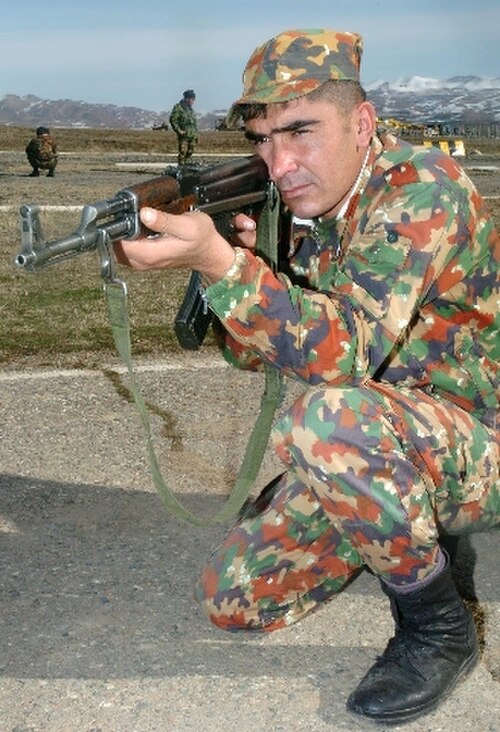
Swiss Alpenflage, the six-colour Leibermuster-derived cold-war pattern, nicknamed the four-fruit pyjama, that dressed a neutral army for three decades.