
Camouflage History
CADPAT: The Pattern That Started the Digital Camouflage Revolution
Before the US Marine Corps had MARPAT, before the US Army had UCP, before any European army printed pixels on a uniform, there was a small Canadian programme that quietly changed camouflage forever. This is CADPAT: the pattern that put “digital” on the battlefield, its four variants, the decade of testing behind it, and why Canada is now replacing it.
The first true digital camouflage
In military camouflage, “digital” does not mean pixels on a screen. It means a pattern built from small, distinct, square-ish blocks of colour that are intended to be read by the eye as a single overall tone at distance, an effect that works better than smooth-edged shapes for breaking up a silhouette, particularly against vegetation and at range.
Canada is generally credited as the first military to put such a pattern into operational service. CADPAT, the Canadian Disruptive Pattern (French: dessin de camouflage canadien, DCamC), is a computer-generated pattern developed by the Canadian Armed Forces. It was issued in 1997 and fully standardised across the Canadian Forces by 2002, replacing the olive-drab uniforms that had been standard for decades. In the small world of camouflage history, that makes CADPAT the reference point for a whole generation of pixelated patterns.

What CAMO pattern came before: Canada’s long wait
It is worth remembering how long Canada went without an indigenous camouflage. After the Second World War, Canadian airborne units (including the 1st Canadian Parachute Battalion) wore British-made Denison smocks in the classic brushstroke pattern, but those were wartime stocks that ran out. The Canadian Airborne Regiment was issued a DPM airborne smock in 1975, its first camouflaged garment in roughly a quarter-century, but it remained the regiment’s only camo item until the regiment disbanded in 1995.
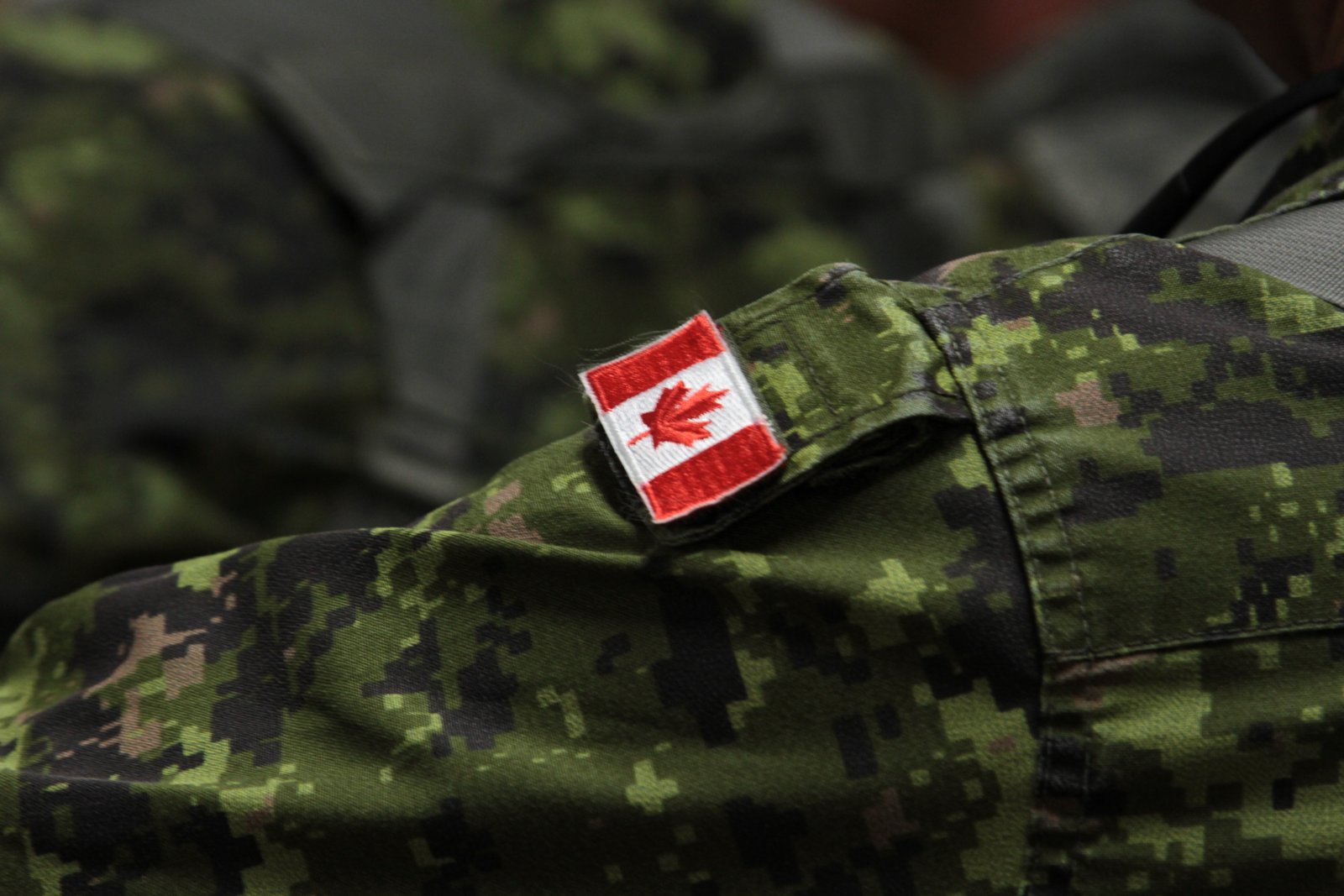
For most of that time, the standard Canadian combat uniform was solid olive drab, known as “Canadian Average Green”. A dark woodland garrison jacket appeared briefly in 1989 but was never a combat item. A tan desert version was trialled in the mid-1990s. It was only in the 1990s that Canada’s replacement soldier-systems programme gave the country the research platform it needed to design its own pattern from scratch, a line of work that began with the Integrated Protective Clothing and Equipment demonstration (launched in 1995, later cancelled) and was carried forward by the Clothe the Soldier (CTS) project.

A uniquely Canadian development
The hardware side is worth spelling out. CADPAT is what a country gets when it decides not to buy a pattern off the shelf. The temperate woodland version was the first to be finalised, with field tests beginning in 1995. After satisfactory results, the pattern was adopted by Land Force Command in 1997, and the testing was not formally concluded until 2001, when it was trademarked. The first reported operational use of the temperate pattern came in September 2001, with Canadian soldiers in Bosnia and Herzegovina.
Two design choices set CADPAT apart. First, the pattern incorporates near-infrared (NIR) technology at the ink level, meaning it is engineered not just to hide the wearer from the naked eye but also from night-vision devices that see into the near-infrared. Second, it is a genuinely controlled design: the Department of National Defence owns the copyright and intellectual-property rights, which makes Canadian issue uniforms “controlled items”. Other armies freely copied the look of pixels; they could not simply buy the Canadian pattern and re-print it.
The variants, and a word on how they’re named
CADPAT has been produced in four operational variants, and the confusion that surrounds their names is worth clearing up before listing them. In collecting and surplus circles you will sometimes hear CADPAT described as “Type 1” and “Type 2”, or as a “TX” pattern, or as separate “woodland” and “hot weather” designs. None of those is an official Canadian designation. “TW” is not a “Type”; “TX” is almost always a misreading of TW; and “hot weather” describes a garment (a combat shirt), not a separate camouflage. The genuine distinctions are of two kinds, different patterns tuned to different terrain, and different generations of uniform cut from the same pattern.
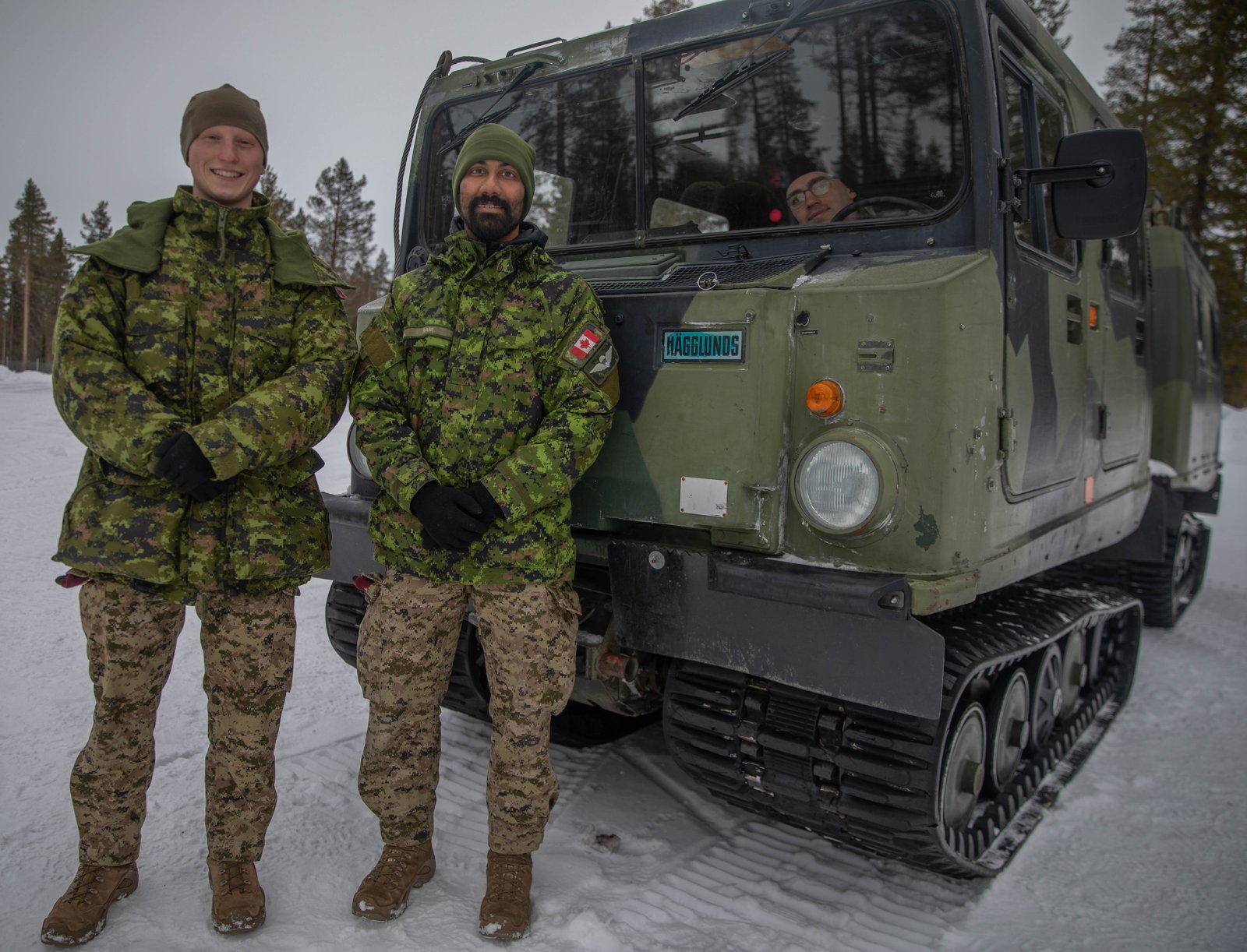
- Temperate Woodland (TW) issued first, a mix of light green, dark green, brown and black, designed for forest and grassland. This is the iconic CADPAT, sometimes nicknamed “relish” by soldiers for its colour mix. It first appeared in the late 1990s on the helmet cover of the new CG634 helmet and on a personal camouflage net, before becoming the standard combat uniform.
- Arid Regions (AR) introduced in 2002 for desert, near-desert and savannah, using three shades of brown. It added two arm pockets and Velcro on the arms compared with the TW uniform. It saw much of the Canadian employment in Afghanistan.
- Winter Operations (WO) the arctic / snow version, a full ensemble for operating in snowy conditions. Camopedia sometimes writes this one as WA (Winter/Arctic); the two letters refer to the same pattern.
- Multi-Terrain (MT) the newest, and the one that is now replacing TW and AR.

Clothing and accessories in this pattern are in our catalogue: CADPAT.
