
Camouflage History
Loreng: Indonesia’s Camouflage from the Malvinas DPM to Today’s Digital Uniforms
At the start of October 2025, after more than four decades as the standard battle dress of the Indonesian National Armed Forces, the camouflage that Indonesians call Malvinas was declared obsolete. Its replacement is a lighter, pixelated design in sage green tones, chosen because the old three-colour scheme had come to be seen as too dark for operations in country that is not dense jungle.
The name is the first surprise. The Malvinas is named after a war Indonesia never fought: the 1982 South Atlantic conflict that Argentina calls the Guerra de las Malvinas. The pattern itself is a British derivative, adopted just as the armed forces decided that a single camouflage should serve an archipelago of more than 17,000 islands. What follows is the story of that decision, of the patterns it displaced, of the units that kept their own, and of the long shadow the Malvinas still casts over how Indonesia looks on the battlefield.
What loreng means
In Bahasa Indonesia, loreng is the word for a camouflage pattern, and by extension for the uniform printed with one. A soldier does not say that he is wearing camouflage; he says that he is wearing loreng. The word covers every branch, every period and every colourway, from the blood-red trails of the special forces to the blue pixels of the air force, which is why the country’s camouflage history reads better as a family tree than as a list of individual patterns.
That family tree has an unusually clear turning point. Before the 1980s, Indonesian camouflage was a patchwork of imported and locally copied material, and units looked like the foreign suppliers they had learned from. After it, a single pattern dominated for two generations of soldiers and produced the national standard that the 2025 announcement has now closed.
Before 1982: a patchwork of borrowed patterns
The first camouflage worn by Indonesian forces came from abroad. Locally made versions of the United States M1942 spot pattern reached the country through the Netherlands, and the police mobile brigade, Brimob, used spot designs before 1965 in the same way that other elite units did. What followed over the next fifteen years was a period of unit-level experimentation in which almost every pattern had a foreign ancestor and almost none was planned at national level.
Airborne and special forces units were the most inventive. In the early 1960s, RPKAD, the army special forces, and the combined airborne training command, KOGABDIKPARA, received crude copies of the British brushstroke Denison smock produced in Hong Kong, printed with dyes so dark that the pattern could only be distinguished at close range. The same training command wore a locally produced copy of the French lizard pattern between 1964 and 1966, alongside a one-piece tiger stripe coverall made in Thailand. Airborne brigades wore Indian-made Denison copies from 1964 onwards, and the marine commando corps adopted its own brushstroke design in 1965. Other formations went further: a military region in West Java printed a regional pattern that embeds the outline of a kujang blade, and Indonesian peacekeepers in the Sinai wore a spot design observed on no other unit.
For an army that was still writing its own doctrine, the result was practical but incoherent: uniforms reflected the supply chain rather than a plan. The decision that ended the period came in 1984, and it was taken at the top.
Loreng Darah Mengalir: the pattern made by a printing error
One of those experiments became the most recognisable camouflage in Indonesia, and it began with a mistake. The army special forces had asked for a copy of the British Denison brushstroke smock. When the order came back from the printing plant, the design had collapsed into long vertical trails that ran down the cloth like vines, or like blood running down a wall. The unit kept it. The pattern was named Loreng Darah Mengalir, flowing blood, and it was worn from 1964 until 1986.
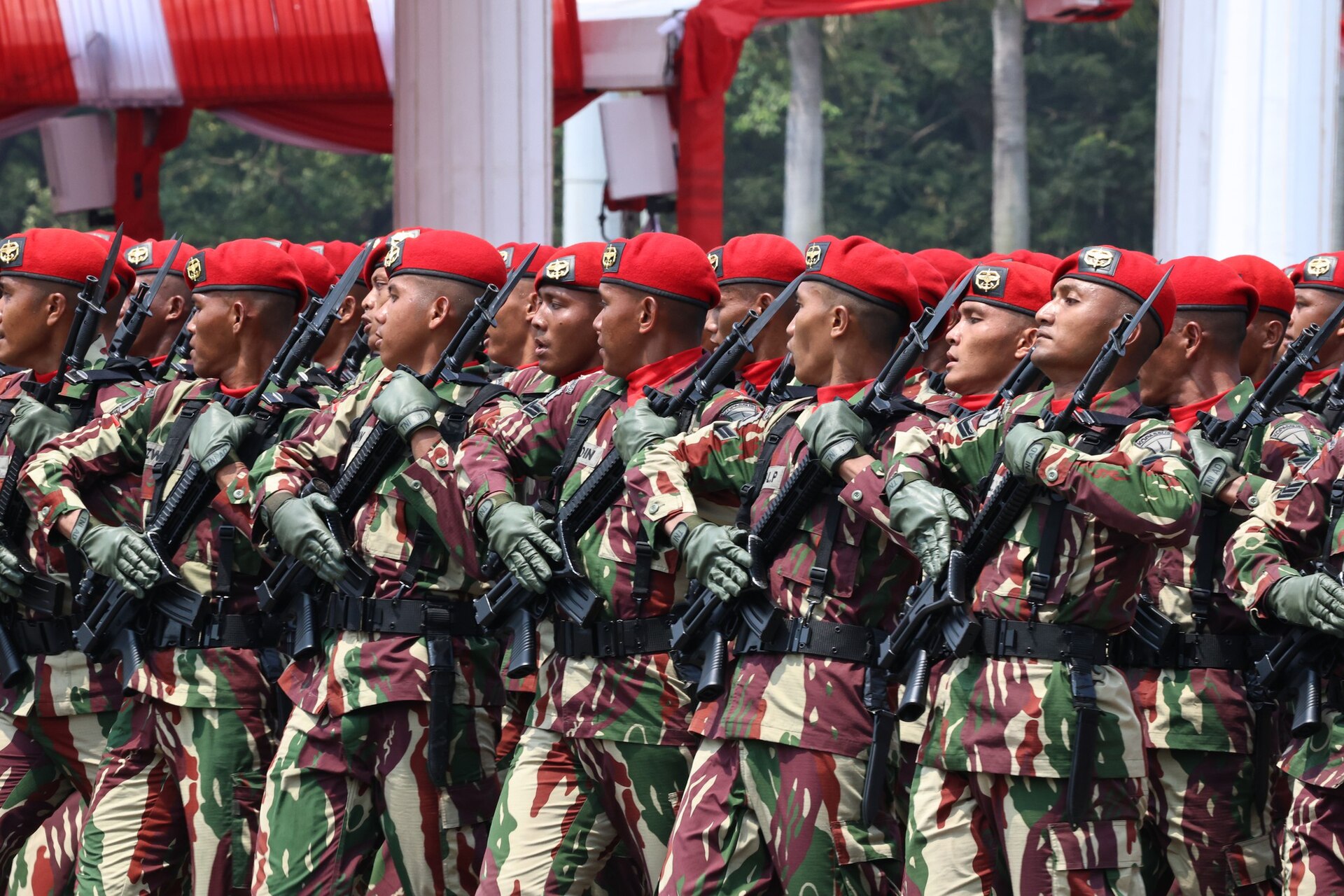
The mistake proved durable. A second version with slightly different shapes was revived for Kopassus in 1995 and is still worn for ceremonies and training, which makes the flowing blood pattern both the oldest design in continuous Indonesian use and the only one that owes its existence to a manufacturing fault. The Camopedia reference entry on Indonesia traces the design to that printing error, and the evolution of the pattern since then has been a matter of fabric and cut rather than of drawing.
It also set a pattern of its own in Indonesian military culture. The most distinctive camouflage in the country was not the one designed by a committee, but the one a supplier got wrong and a unit decided to keep.
1984: one pattern for the whole armed forces
The standard pattern arrived in two steps. A British-style disruptive pattern material, DPM, was introduced in 1982, and in 1984 General Benny Moerdani, then commander of the armed forces, ordered every branch to standardise on it. Everything that had come before became obsolete at a stroke. The first print was a close copy of the British tropical DPM of the 1970s and was issued until 1989; the second print, with larger and softer shapes, became the army’s operational uniform for more than thirty years and remained the reference point for every later Indonesian design.
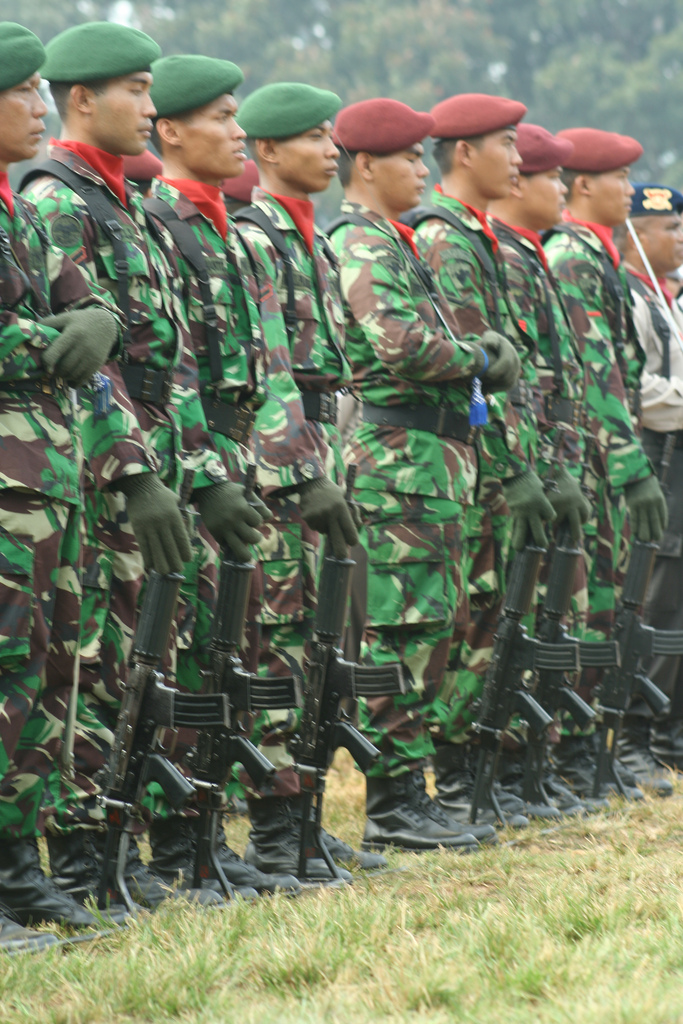
The DPM solved a procurement problem and created a visual identity at the same time. It worked with the same large colour blocks as the British original, dark green, dark brown and cream, and it was cheap enough to print in quantity on locally produced cloth. Within a decade it had displaced every unit pattern in the inventory, with the exception of ceremonial and unit-specific dress, and it became the default image of the Indonesian soldier abroad, from United Nations missions to joint exercises in the region.
Why Indonesia calls it Malvinas
The nickname is the part of this story most often repeated and least often explained. The Malvinas is the name Argentina gives the Falkland Islands, and the war over them was fought and lost in 1982, the same year the Indonesian pattern entered service. That coincidence of dates is the explanation given in camouflage reference work, and it is the one that makes sense of a country with no stake in the South Atlantic: the pattern needed a name, and 1982 supplied one.
Some Indonesian coverage goes further and describes the design as having been inspired by the conflict. No procurement record supports that reading, and the shapes themselves come from British tropical DPM, which suggests that the Falklands supplied the date rather than the drawing. Both versions are worth knowing, because the nickname has become so standard that it now functions as the pattern’s name.
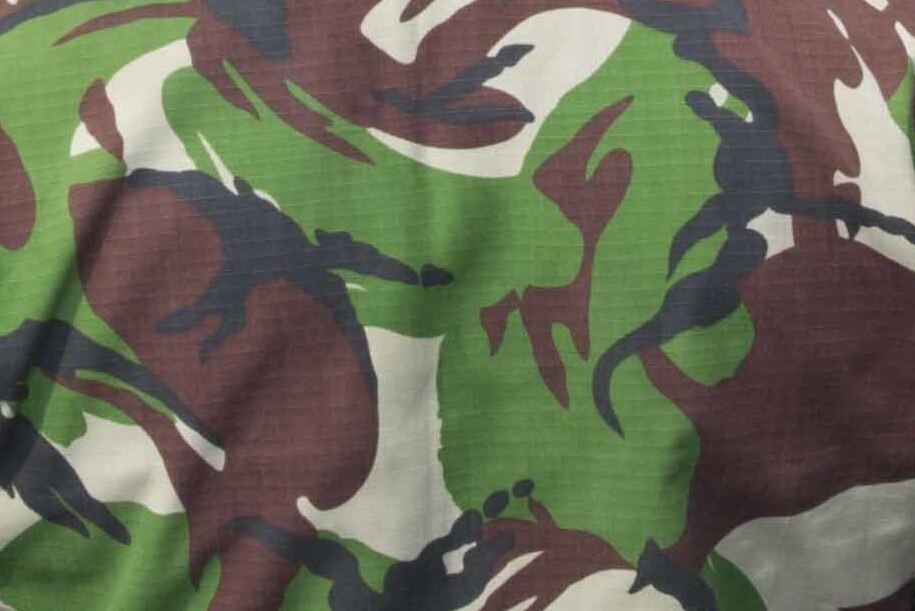
Printed on a range of cloth weights, the same design appears in four or five tonal variants depending on supplier and year, from a light khaki-dominant version to the saturated green, dark red and black seen on marine uniforms. Collectors use the shape of the print, not the colour alone, to date a garment, because the palette drifted while the drawing stayed the same.
Blue loreng: the Air Force’s own family
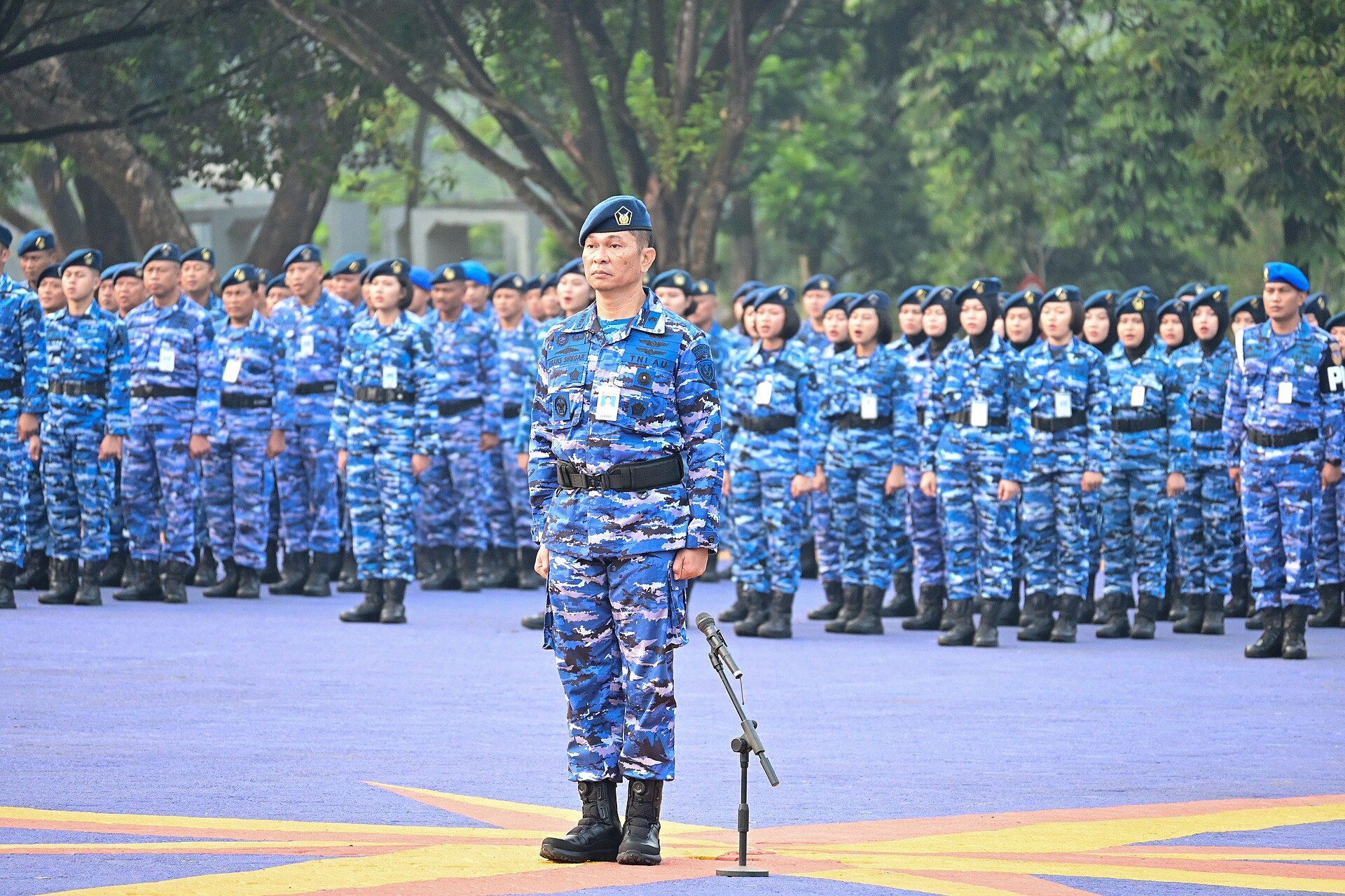
The armed forces standardised in 1984, but the services never merged their identities. The air force wore the standard DPM for three decades and then replaced it on 5 October 2015, the service’s anniversary, with a pixelated design in black, grey, off-white, blue-grey and medium blue that carries the silhouettes of aircraft inside the pattern. The navy developed pixelated variants of its own, and the marine corps went back to the spot pattern it had worn in 1983 and 1984, known locally as Macan Tutul, the leopard, for some units from 2011. The army kept the DPM longest.
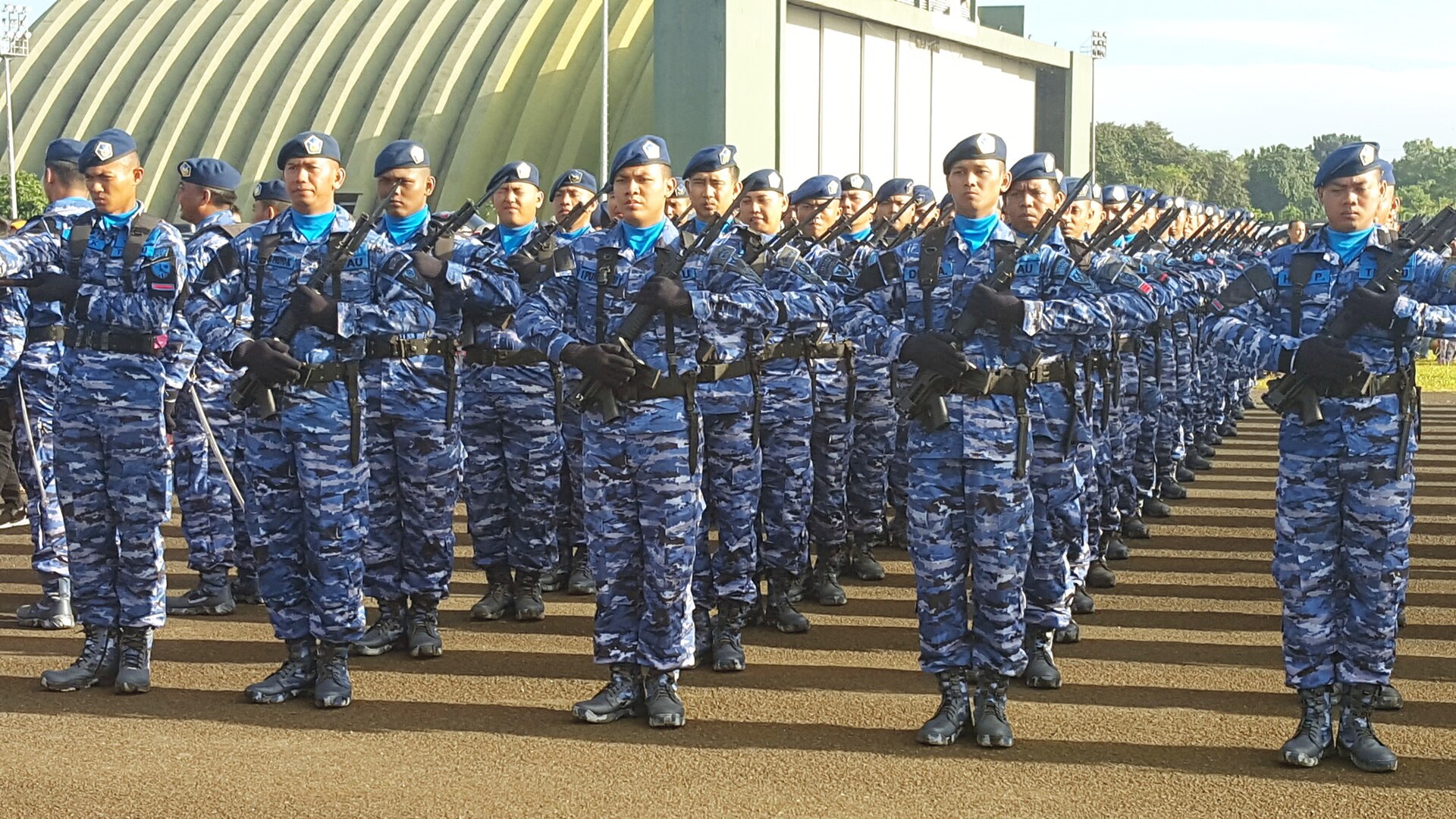
The blue family has kept evolving inside its own logic. Later air force uniforms retain the pixel grid but shift the balance between pale sand and blue, and the service uses the pattern as a service marker rather than as a jungle tool: on an airbase, the camouflage identifies the wearer before it hides him.
The digital turn in the army
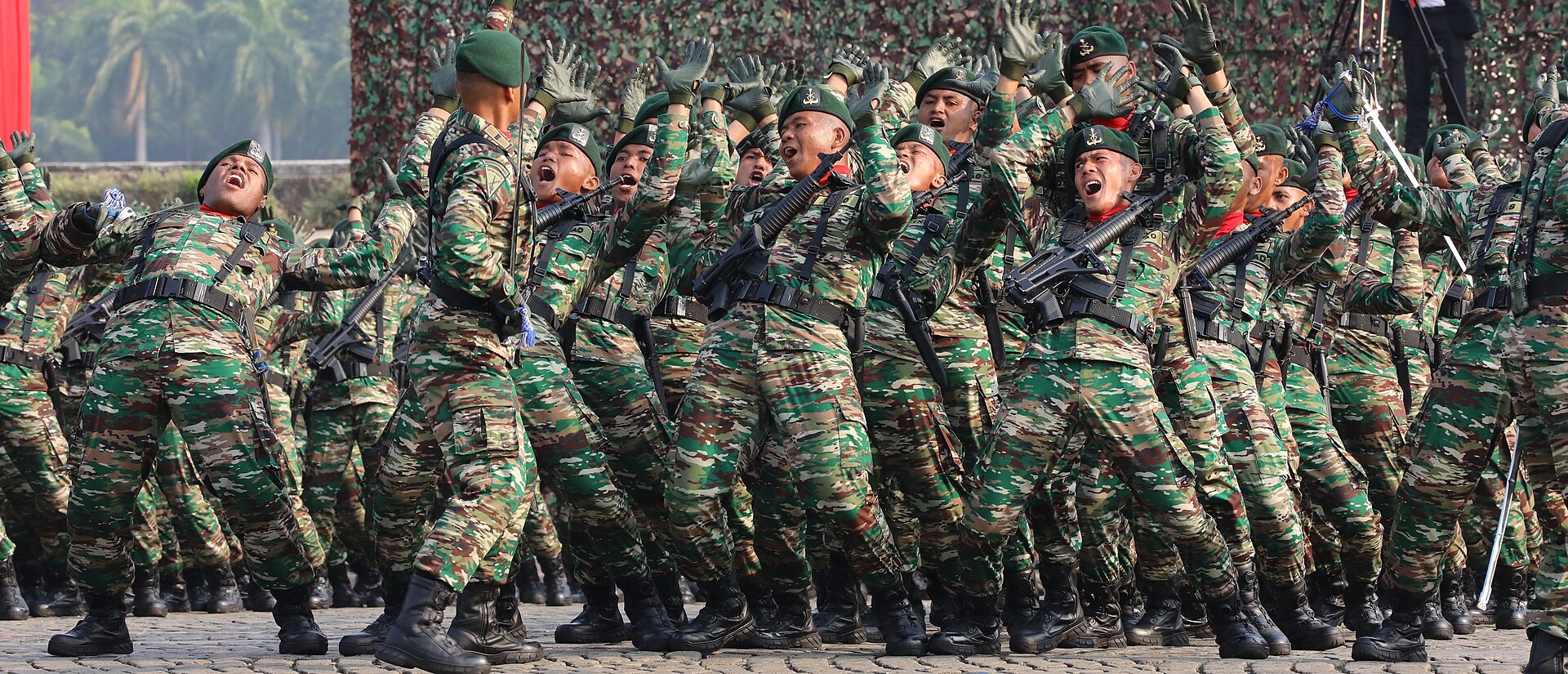
The army moved last. In March 2022 the service announced a new field uniform, the PDL Khas Matra Darat, which kept the Indonesian colour palette but replaced the large blocks of the DPM with smaller, layered shapes. Soldiers began wearing it in public, and it acquired the informal name IndoCam. It never replaced the DPM across the force: by 2025 it had dropped out of the replacement programme, and it was still visible at parades in 2023, worn alongside the older pattern.
What comes after the Malvinas
At the start of October 2025, the armed forces headquarters announced that the Malvinas would finally be retired in favour of a pixelated design in lighter sage green tones. Indonesian reporting at the time gave the reason plainly: the old palette was too dark for operations outside heavy foliage, and a lighter pattern with more tonal range would work in scrub, dry ground and built-up areas as well. The new design resembles an earlier airborne command pattern, the Loreng Linud, but with a different balance of colour.
Whether it lasts is a separate question. Indonesia has now announced two replacement projects in four years, and the DPM survived both of them, partly because a camouflage printed in millions of metres is difficult to replace quickly, and partly because the pattern had become an identity rather than a piece of equipment. The appearance of a new green design in the strategic reserve command in 2026 suggests that the process is still running.
Why the Malvinas lasted more than four decades
The Malvinas lasted for reasons that have little to do with camouflage science. It was cheap, it was made at home, it was already in the supply chain, and it was the same on every island of the archipelago, which matters for a force that moves units between Java, Kalimantan, Papua and the lesser Sunda islands. A pattern that hides a soldier imperfectly in one environment hides him acceptably in four, and a single national standard is easier to store, print and replace than a set of regional ones.
The 2025 decision is a bet that the trade-off has changed. Lighter pixelated designs break up the human outline at close range more efficiently than large blocks, and they tolerate dry and urban ground better than a jungle palette. What they do not provide is the instant recognition that a forty-year-old pattern gives a soldier, a collector, or anyone looking at a photograph taken before the change.
For readers who want the look rather than the history, MegaCamo keeps Indonesian loreng in a dedicated collection: the Indonesia collection gathers the patterns in one place, and the Kopassus Loreng Darah Mengalir bomber jacket and the matching hooded T-shirt reproduce the 1995 version of the flowing blood design. For the British original that Indonesia copied in 1982, our history of British DPM explains where those shapes came from.
