The six-colour desert pattern — “chocolate chip” — was a decade-old specialist uniform when the 1990-91 Gulf War turned it into the most photographed camouflage on earth. What it is, where it came from, and why other desert patterns are so often mistaken for it.
Author Archives: Megacamo
Frog skin and duck hunter: what the 1942 US camouflage uniform’s record does and does not show, and how to tell wartime cloth from later copies.
The Waffen-SS pea dot was printed, not drawn: its round grains are the raster of a five-colour fabric press. The first non-reversible SS camouflage, 1944.
How South Korea’s digital granite pattern was designed, why soldiers called it the steam-cooker uniform, and why no replacement has been approved.
Most camouflage patterns are asked to hide a soldier in one kind of landscape. France’s pale mountain pattern is asked to hide one in two at once: the white…
In September 1990 France renamed its military contribution to the Gulf crisis Opération Daguet. A daguet is a young stag — a male deer in its second year…
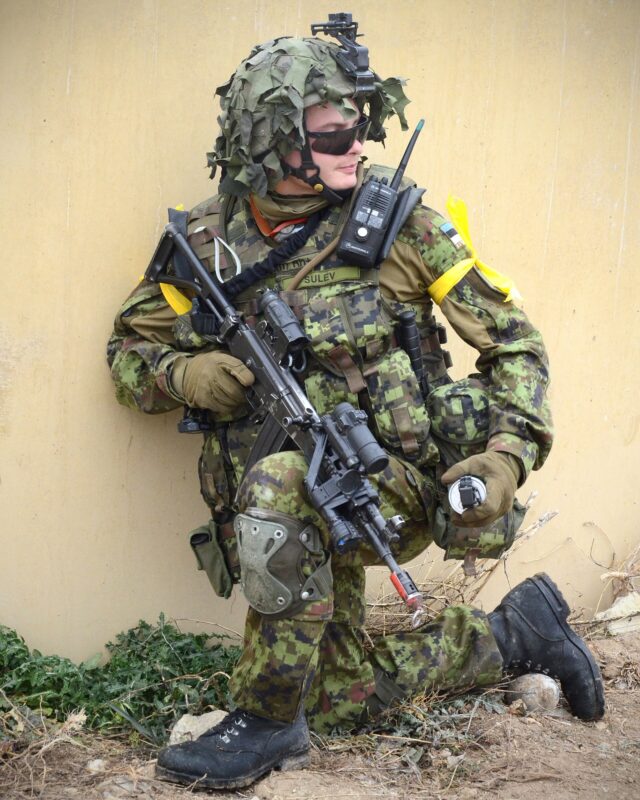
In the second half of 2006 the Estonian Defence Forces took a pixelated field uniform into service. It came in two colourways at once: a greenish four-colour…
Finland’s service camouflage is usually described as a woodland pattern with a few climate variants tacked onto it. The order of events is the opposite. The…
In Russian, камыш — kamysh — is the reed at the water’s edge, and the word has been asked to carry several quite different prints. This article separates the circa-1993 tiger-type design, the 1995 камышовый рисунок and the grey «Серый камыш», and sets out what is documented about the units that wore them.
Yugoslav M89 Hrastov List — the non-aligned JNA’s own oak-leaf pattern, worn through the wars and outliving its country.