
Uncategorized
Soviet and Russian Camouflage Nomenclature, Explained: How the Names Actually Work
KLMK. KZS. TTsKO. VSR. Dubok. Flora. Berezka. Izlom. Partizan. EMR. Each of these is a real name from the Russian and Soviet camouflage world, and each is used in more than one way. They are case studies, not the definition of the subject. The subject is the naming system itself: how Russian and Soviet camouflage names are formed, what they actually designate, why one pattern carries several names, and why one name can mean several different things. This guide explains that system, it is a reference to the nomenclature, not a catalogue of every pattern.

Introduction: why Russian camouflage names are so confusing
Ask a collector to name the Russian military camouflage and you will get a list: KLMK, KZS, TTsKO, VSR, Dubok, Flora, Butan, Berezka, Izlom, Partizan, EMR. Ask what those words actually mean, and the answers start to disagree. The same design carries three names. A single name refers to a jacket on one website and a pattern on another. A garment is marketed as if it were a pattern. And an acronym that sounds official turns out to be a label invented by an English-language book.
This guide is not a catalogue of Russian camouflage patterns. It is a guide to the names: how they are formed, what they really designate, why one camouflage has several names, and why one name can point to several different things. The goal is to let you tell a pattern from a garment, an official designation from a collector’s nickname, and a real Soviet term from a label invented by a Western reference book.
A camouflage name is not always a pattern name
The first thing to decide about any Russian or Soviet camouflage name is what sort of thing it is naming. A striking number of the names you will meet do not name the drawing on the cloth, they name the coverall, the suit, the programme, or the company. This is a real and widespread tendency in Russian usage. But it is a tendency, not a law: some names genuinely are pattern names, and the point of this guide is to help you tell the two apart rather than assume one rule applies to every term.
In the English-speaking military tradition we tend to assume a name describes the drawing on the cloth: “woodland” is the pattern, “desert” is the pattern. We buy a “MultiCam shirt” and the name tells us the design. Russian usage is often different, but it is worth separating the reasons carefully, because they are not all the same kind of thing:
- Documented administrative practice. The Soviet supply system issued formal type-designations for pieces of equipment, the coverall, the protective suit, and those designations belonged to the object, not to the drawing printed on it. This is why several acronyms (KLMK, KZS) are garment names.
- A common tendency, not a rule. In many cases the object’s name later drifted onto the pattern it carried, so the garment name became the de-facto pattern name. This happened often, but not universally: some Soviet and Russian patterns did have their own names.
- Individual examples. Each case is its own instance. KLMK names a coverall; the drawing on it is named Berezka. KZS names a suit. These are specific cases, not a blanket statement about every name.
- Post-Soviet commercial practice. After 1991, manufacturers coined their own product labels (Skol, Izlom, Palma), and sellers invented names that market well.
- Collector and Western interpretation. English-language collectors sometimes inverted the relationship, treating a garment’s name as the pattern’s name, and that inversion, repeated, is a large part of the confusion you see online.
So the useful question is not “is the Russian system different?” but “which of these is happening here: an official object designation, a nickname that drifted, a company label, or a collector’s shorthand?” The rest of this guide answers that question term by term.
How Soviet and Russian naming systems work
Two different naming habits intersect in the Russian camouflage world, and it pays to keep them apart.
1. The Soviet habit: name the object
One identifiable habit runs through the Soviet supply system: it tended to name pieces of equipment rather than drawings. A camouflage garment carried a formal type-designation, usually a long Russian phrase describing its function and construction, abbreviated into an acronym. The acronym belonged to the object; the drawing printed on that object might have a project name, a unit nickname, or no name at all. This is a documented administrative practice for a specific group of items, but it is not a rule that applied to every Soviet camouflage.
So KLMK is an acronym for a “camouflaged summer masking coverall” (the Russian entry on the KLMK coverall gives the phrase; the Soviet abbreviation dictionaries order the words slightly differently). It is a thing. The drawing on it is a separate matter. Likewise the KZS is a “protective mesh suit”, a garment with a protective-masking role. Its camouflage belongs to the same leaf-family drawing that the KLMK coverall carries (the Berezka/silver-leaf design); the name describes the suit. These two are concrete examples of the practice; they are not a rule that covers every Russian camouflage name.
2. The Russian habit: folk names and commercial labels
After 1991 the official supply system loosened, and a flood of new patterns appeared for the army, the MVD, the special forces and the commercial market. Only some of these got clean official designations. Many were known by colourful folk names, an animal, a plant, a texture, or by the name of the company that made them.
This is why so many Russian camouflage names are descriptive nicknames rather than designations. “Dubok” means “little oak” and refers to the leafy shapes. “Flora” is just Latin for plant. “Berezka” means “birch tree.” “Kamysh” means “reed” or “cane.” “Tigr” means “tiger.” These tell you what the design looks like, not what the army calls it on paper.
Add the commercial layer on top, companies like SSO (Soyuzspecosnashcheniye), Splav, Magellan, Tactic-9, BARS, and you get a third set of names: the manufacturer’s own product labels, which may not match the folk name at all.
Pattern, garment, programme or label?
To read any Russian camouflage name correctly, the first question is always: what does the term actually name? Four kinds of thing cover almost every case, and they map directly onto the reference tables at the end of this guide.
1. A camouflage pattern, or pattern family. The drawing on the cloth, the layout itself, whatever it is printed on. Examples: Flora, EMR, the Berezka leaf design, Izlom.
2. A garment, uniform or oversuit. An article of clothing or a full kit that wears a drawing. Examples: KLMK (a coverall), KZS (a suit), Partizan (a style of suit), ZDU, VKBO.
3. A programme, project, system or administrative designation. The effort behind the design, a research project, a soldier system, or an official category. Examples: Butan (a development project), Ratnik (a soldier-system programme), Barvikha (a research name).
4. A retrospective, Western, collector or modern label. A term invented later to talk about or identify a pattern, not the name the army actually used. Examples: VSR-93, VSR-98, Digital Flora, TTsKO Woodland.
A name can slide between these categories over time. The word “Berezka” originally referred to the leaf pattern, but Russian sources also apply it to a vertical version of the VSR. The word “Sumrak” (dusk) is used for at least two different things, as we will see.
Here is the practical instruction: when you meet a term, first decide which of the four things it names. A term that names a garment is not a pattern even though a pattern is printed on it; a term that names a project is not a pattern even though a design came out of it; and a modern label is not the name the army used. Answer that one question and most of the apparent chaos resolves.
Decoding the acronyms
Russian and Soviet jargon loves acronyms. The problem is that the same acronym can be expanded two ways, the letters can be reordered, and the expansion names a garment rather than a drawing. Here is the core set, with the original Cyrillic, a transliteration, the literal meaning, and what the term actually designates.
TTsMKK, a Second World War suit, not a pattern
Original: Трёхцветный маскировочный камуфлированный костюм (Tryokhtsvetnyi maskirovochniy kamuflirovanniy kostyum), abbreviated ТЦМКК TTsMKK (taken word-initial the phrase yields Т–М–К–К; the extra Ц is a convention of usage rather than a word-initial).
Literal English: “three-colour masking camouflaged suit.”
What it is: a Soviet suit generally dated to 1944–45, although whether it saw wartime field use remains uncertain. It is a garment the Russian word kostyum means “suit” or “uniform”, not the name of a drawing.
The drawing that suit carries is a three-colour disruptive design, dark green and foliage green over a yellow-tan base, built from the stepped, jigsaw-like shapes collectors call the “stair-step.” It looks digital, but it was printed, not computed: the same “digital before digital” point made later about Berezka. The three-colour camouflage pattern printed on the TTsMKK, generally dated to 1944–45, is often treated as an early predecessor to the later Soviet leaf / stair-step family.
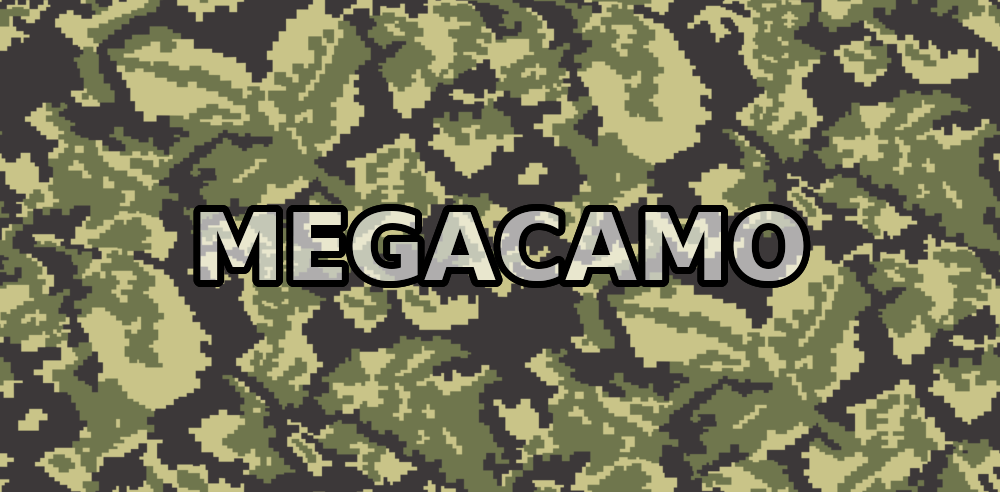
So why does it keep being read as a pattern? Because the West named the pattern after the suit. English-language references, Camopedia among them, write “TTsMKK pattern,” but TTsMKK names the suit (generally dated to 1944–45). That is the garment-name-borrowed-onto-pattern move this guide keeps flagging. And the modern market keeps the confusion alive: SPOSN’s Palma designs, Palma-Spring, Palma-Winter and their Amoeba-like variants, are described by Camopedia as modern reinterpretations of the Soviet TTsMKK three-colour stair-step design. That establishes a design relationship, not identity of the historical repeat.
KLMK, a coverall, not a pattern
Original: Камуфлированный летний маскировочный комбинезон (Kamuflirovannyi letnii maskirovochnyi kombinezon).
Literal English: “camouflaged summer masking coverall.”
What it is: a one-piece, hooded, lightweight summer coverall developed in 1968 to counter NATO optics and night-vision devices. It is a garment.
The Russian abbreviation dictionaries render it as “kamuflirovannyi letnii maskirovochnyi kombinezon,” and the main Russian Wikipedia article orders the words the same way: “Kamuflirovannyi letnii maskirovochnyi kombinezon.” The two sources agree on the word order, and it is that order, kamuf-lirovannyi, letnii, maskirovochnyi, kombinezon, that gives the K-L-M-K acronym.
The crucial point: KLMK names the coverall. The pattern printed on it has several names of its own, Berezka (“birch”), serebryanyi list (“silver leaf”), solnechnye zaychiki (“sun rabbits”), and it is those that describe the drawing. When someone says “KLMK pattern,” they usually mean the Berezka drawing that the KLMK coverall carries. That is a garment name borrowed onto a pattern, and it is one of the most common confusions in the field.

KZS, a protective suit
Original: Костюм защитный сетчатый (Kostyum zashchitnyi setchatyi).
Literal English: “protective net suit” or “mesh protective suit.”
What it is: a lightweight protective-masking suit issued from the mid-1970s to the chemical and radiation troops. It was impregnated to resist fire and to blunt the flash of a nuclear explosion, and it was disposable: once contaminated it was buried. Its camouflage is close to the KLMK/Berezka leaf drawing (per the forma-odezhda encyclopedia).
Note the wording. Many Western sources expand KZS as “kostium zashchitnoi seti” (protective net suit), while Russian sources write “kostyum zashchitnyi setchatyi” (mesh protective suit). Both point to a protective garment worn over the OZK or OKZK combat protective kit, a suit, not a drawing. Its camouflage is a decoration on the suit, inherited from the leaf family.
TTsKO, a clothing designation that became a pattern shorthand
Original: Трёхцветная камуфлированная одежда (Tryokhtsvetnaya kamuflirovannaya odezhda).
Literal English: “three-colour camouflage clothing.”
What it is: a description, “three-colour camouflage clothing”, that stuck to a family of three-colour woodland designs developed for the Soviet military, and to their successors. In the West it is used as a pattern name (Camopedia; the Russian technical literature).
TTsKO is the clothing designation. It is easy to mix it up with a separate term, Butan, which is reported as the name of the camouflage-development project, and with Dubok, a country-specific nickname used in Ukraine. And the acronym itself romanizes inconsistently, giving TTsKO or TsKO. These are the same Russian words romanized differently, not separate patterns.
The “1983 3-TsV TTsKO Woodland” label, analyzed
You will sometimes meet a long name that looks like an official Soviet designation: “1983 3-TsV TTsKO Woodland.” It is not one. It is a modern clause built by joining several different kinds of label, and it is worth taking apart piece by piece, because it is a perfect example of exactly the confusion this guide is about.

“1983.” A date. It roughly marks when the three-colour camouflage came into service, but sources disagree on the year: some say 1981, some 1983, some 1984. The date is not part of a documented official name.
“3-TsV.” A reference designation widely used for Soviet and Russian three-colour camouflage designs. The “3” and “Ts” point to трёхцветный (tryokhtsvetnyy, “three-colour”), a plain descriptive word rather than a formal designation. It is not an official Soviet pattern name.
“TTsKO.” The abbreviation of трёхцветная камуфлированная одежда “three-colour camouflage clothing.” Historically it named the clothing or uniform category, and only later was it applied to the drawing, chiefly in Western and commercial usage.
“Woodland.” A modern English descriptor, used to identify the green/brown, leaf-like variant visually. There is no evidence the Soviet or Russian army used the word.
The same is true of the labels collectors and sellers use to tell the many colourways apart: “TTsKO Airborne,” “TTsKO Brown,” “TTsKO Green,” “TTsKO Mountain,” “TTsKO Woodland.” These are genuinely useful today to distinguish one variant from another, and they do describe real differences in the base colour. But they are modern identification labels, and no evidence shows they were contemporary names. Where a contemporary designation for a given variant is known, it is given; where it is not, the modern label is the only name available.
VSR, armed forces, but which exact sense?
Original: Вооружённые силы России (Vooruzhennyye sily Rossii), “Armed Forces of Russia”, or Вооружённые силы, расцветка (Vooruzhennyye sily, raskraska), “Armed Forces, coloration.”
What it is: an abbreviation used to name several general-issue Russian camouflage colourations, with a year suffix: VSR-93, VSR-98, and in some sources VSR-84.
The expansion is genuinely not fixed. English-language references (and Camopedia) read VSR as “Vooruzhennyye sily Rossii,” Armed Forces of Russia. The Russian Wikipedia, by contrast, explicitly glosses one of them as “Vooruzhennyye sily, raskraska,” Armed Forces, colouration, so the two-letter group is read as the branch plus the word for pattern. Either way the year is the decisive part: VSR-93 is one design, VSR-98 is a different one.
Here is the twist: the VSR-93 and VSR-98 labels themselves are largely a Western retrospective naming device, popularised by the book Camouflage Uniforms of the Soviet Union and Russia by Dennis Desmond. That book is a superb reference, but it labelled patterns that the Russian army never formally named, the Russian Wikipedia even calls the VSR-93 label “actually erroneous” on its dating, since the earliest samples date to 1985 rather than 1993. So “VSR-93” is best treated as a convenient English label, not a found Russian designation.
EMR, “unified,” but the full form is not fixed
Original: Единая маскировочная расцветка (Edinaya maskirovochnaya raskraska), “unified camouflage colouration”; Единый маскировочный рисунок (Edinyy maskirovochnyy risunok), “unified camouflage drawing”; or Единая маскирующая расцветка (Edinaya maskiruyushchaya raskraska), “unified masking colouration.”
What it is: the digital pattern introduced in 2008 and adopted across the armed forces. “Unified” here means one pattern common to every branch, ground forces, airborne, naval infantry, air-force ground staff, replacing the jumble of earlier designs. The dating is best kept apart by phase: development belongs to the 15th Central Research Institute, whose “Dark” (Тёмный) drawing was registered as an industrial design (patent no. 73949, reported by Russian sources); one Russian specialist source gives the first production as early as 2002; one manufacturer gives adoption as 2007; the formal introduction is usually dated 2008; and the broad re-equipment of the armed forces is placed from 2011.
Note how the full name varies. The last word changes (colouration versus drawing versus masking colouration), and the first word agrees with it in gender (Yedinaya with feminine raskraska, Yedinyy with masculine risunok). The initials ЕМР, and the pattern, are the same. This is a textbook example of why “what does EMR stand for” has more than one answer: the acronym is real, but the words behind it were never fixed the way an official regulation would fix them.
Ratnik, VKBO and the “system” names
Two common terms point to systems, not drawings:
- Ratnik (Ратник, “warrior”), the Russian soldier-system programme, the equipment and clothing set worn by the modern soldier. The EMR digital pattern appears in its clothing. “Ratnik” is the programme, not the pattern.
- VKBO (Всесезонный комплект базового обмундирования), the all-season basic clothing set, later renamed VKPO (Всесезонный комплект полевого обмундирования), a multi-layer system of garments, a multi-layer system of garments. Its outer layers carry the EMR pattern. Again: a clothing system, not a drawing.
When you see “Ratnik” or “VKBO” attached to a photograph of a soldier, you are being told about the uniform system, not about which camo drawing it is. It is a common mistake to read these as pattern names.
Other garment and kit acronyms
- SMK (специальный маскировочный комплект, “special masking set”), waterproof summer and winter suits for MVD special forces, printed with a dense four-colour mottled drawing. Suit, not pattern.
- KKO (комплект камуфлированного обмундирования, “camouflage clothing set”), a 1992 set for MVD special-purpose brigades, printing drawings loosely based on the US ERDL/woodland. Set, not pattern.
- KM-P / spetsnaz KLMK a 1992 revival of the KLMK-style coverall for MVD special-designation brigades, printed in four drawings (desert, mountain, tundra, tropical). Garment, not pattern.
Cyrillic and transliteration: why one Russian name becomes several English names
Russian is written in Cyrillic, and there is no single, universally agreed way to turn Cyrillic into Latin letters. Different systems, ISO 9, BGN (the US/UK geographers’ standard), library conventions, and plain commercial spelling, produce different results for the same word. This alone multiplies the number of “names” a reader encounters.
Three examples show the effect.
The abbreviation TTsKO itself. The Cyrillic abbreviation is Т-Ц-К-О. Read letter by letter in the common English transliteration: Т becomes T, Ц becomes Ts, К becomes K and О becomes O so T + Ts + K + O = TTsKO. The apparent double T is not caused by doubling the Ц; it results simply from a T followed by Ts. Because the abbreviation is romanized freely rather than fixed in Latin letters, other transcriptions render ts as c (giving TsKO, or c in the scholarly ISO 9 scheme). All are the same Russian phrase, and no hard sign (ъ) is involved.
The “y” sound. The Russian letter й (as in Yedinaya) becomes y in the common English transliteration (Yedinaya) but j in the Slavic/ISO-9 scheme (Edinaja). So “Edinaya maskirovochnaya raskraska” and “Edinaja maskirovochnaja raskraska” are the same two Russian words.
The “ts” sound. The Russian letter ц becomes ts in the everyday style but c in some systems, the reason you see both “Tsifra” and “Cifra” for the EMR nickname.
None of these spelling differences marks a different camouflage. You must never create a separate pattern out of a spelling variation. If two English names transliterate the same Cyrillic word, they are the same thing.
The practical rule: when you are unsure whether two names are the same pattern, re-transliterate the Russian. If the underlying Russian matches, the names match.
Official designations vs collector terminology
Not every name you read carries the same weight. It helps to sort them into a ladder of authority.
- Documented official designations terms that appear in Soviet or Russian supply documents, regulations, or project files. Examples: the type names behind KLMK, KZS, VKBO; the “Tyomnyy” code for the EMR drawing; the term “unified camouflage” for what is called EMR.
- Project / research-programme names terms from a procurement research effort, not an official pattern name. Examples: Butan, Barvikha, the Ozyim and Levzeya themes. These name the work, not the final military label.
- Folk and unit nicknames names soldiers actually used. Examples: Dubok, Flora, Berezka, Kamysh, Tiger. These are real, colourful, and widely repeated, but they are not designations.
- Manufacturer and commercial names product labels. Examples: Palma, the many Tactic-9 and BARS labels, Izlom/Skol as marketed designs. These belong to the company, not the military.
- Western retrospective names labels invented by English-language reference works or collectors to talk about things the Russian army never formally named. Examples: VSR-93, VSR-98, and “Digital Flora.” The Desmond book is the classic source of this kind.
Here is the caution that governs the whole subject. The fact that a name appears on dozens of English-language collector sites does not make it an official Russian designation. The internet is very good at repeating a label and very bad at checking its provenance. This is exactly how self-confident but unverifiable terms spread.
When you meet an unfamiliar name, ask where it came from. A name traced to a military document is one thing; a name traced to a marketplace listing or a forum post is quite another.
The major naming families and their terminology
Most of the confusion clusters around five families. Knowing the family helps you see why terms overlap.
1. The leaf / Berezka family
This is the light, angular, leaf-like drawing with light shapes on a darker ground. It appears on the KLMK coverall, the KZS suit, and many later commercial garments. Its names multiply: Berezka (“birch”), serebryanyi list (“silver leaf”), solnechnye zaychiki (“sun rabbits”), zolotoy zhyltyy list (“golden-yellow leaf”) for the more golden border-guard version. All of these are variations within one visual family, and all are garment or colour names rather than separate official pattern names. The three-colour “stair-step” drawing on the 1944 TTsMKK suit is often treated as an early predecessor to the later Soviet leaf / stair-step family.
2. The Soviet three-colour woodland family: garment names, project names and later labels
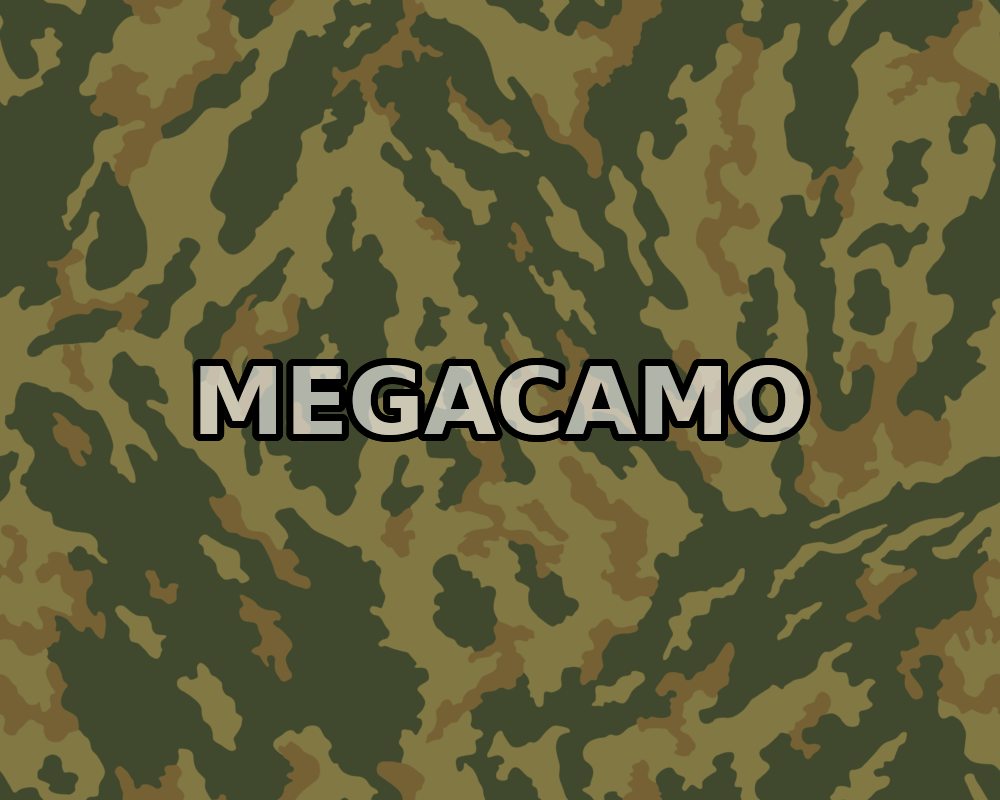
This family is the source of the largest pile-up of names. It uses organic, often vertically aligned shapes in three colours. Depending on the country, the era and the source, this general look is described by a set of terms that sit at different levels rather than being interchangeable. TTsKO is a clothing designation. Butan is a project name, reported rather than firmly documented. Dubok, Barvikha, Vertikalka, Yolka and Arbuz are nicknames. VSR-93 is a retrospective Western label. Some of these are the same design, some are close relatives, and the terminology genuinely disagrees between Russian and Western sources. This is covered in depth below.
3. The Flora / VSR-98 family
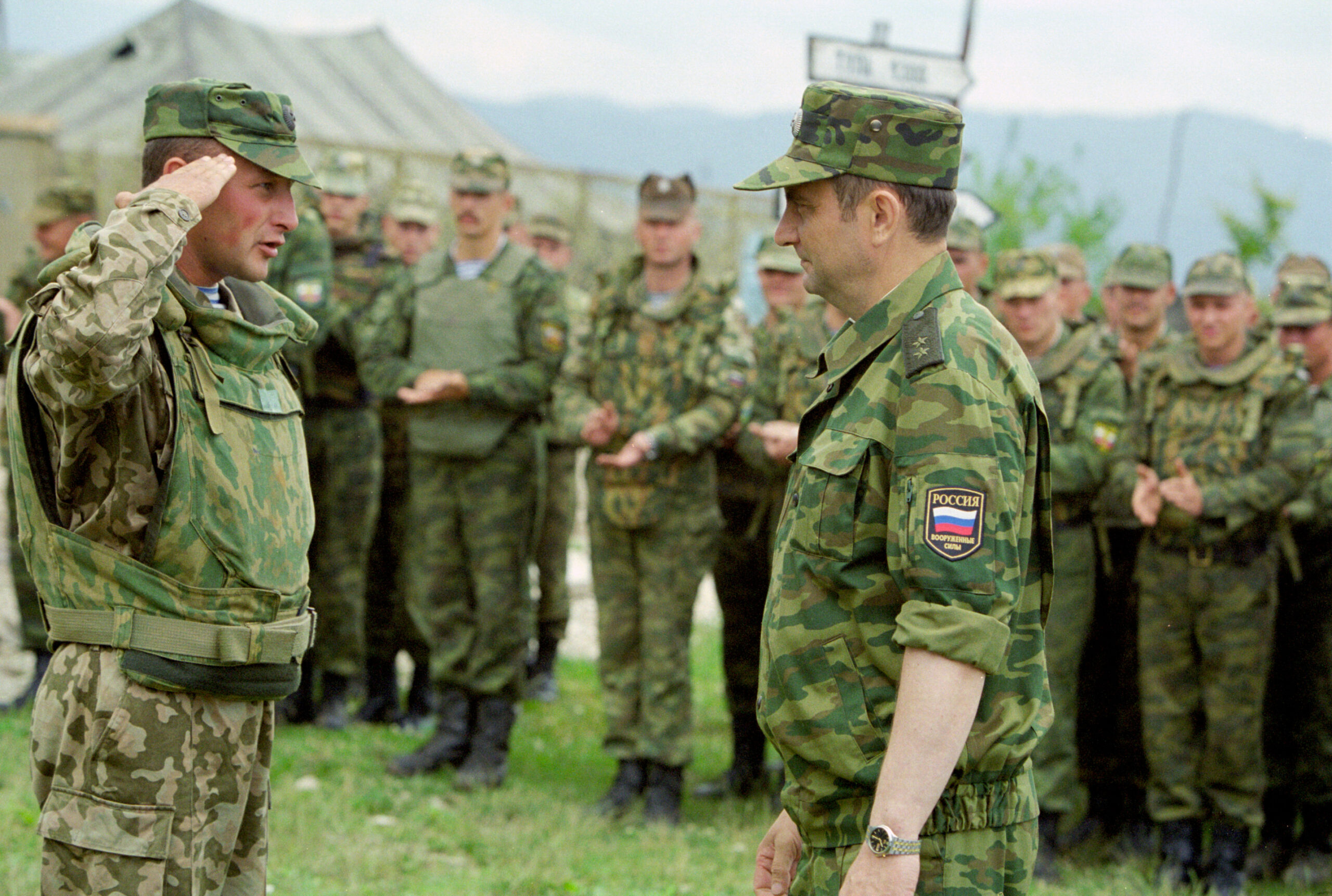
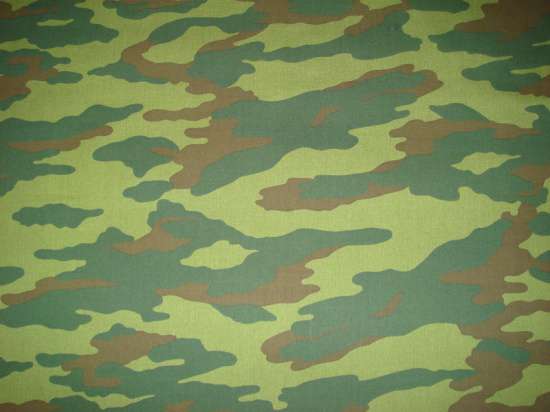
Flora, the 1998 general issue, grows from the same genetic pool but with horizontal rather than vertical stripes. Flora is the pattern; VSR-98 is a commonly used Western/reference label for it. It is also known informally as “Arbuz” (“watermelon”) or “horizontal watermelon.” It formed the basis for the pattern that EMR later replaced.
4. The tiger / Kamysh family
This is a set of tiger-stripe-style drawings adapted from an originally Malaysian or French-lineage design, produced in green and blue (urban) colourways. The names Kamysh (“cane”), Tigr (“tiger”) and Ten (“shadow”) all circle one family; the choice of name says more about the source and the colourway than about a fundamentally different drawing.

5. The commercial “fracture” family, Izlom and Skol
This is the family at the centre of a genuine and worthwhile naming dispute, and it gets its own case study below.
Izlom vs Skol, a case study in naming confusion
Few pairs of Russian camouflage names are more tangled than Izlom and Skol. Depending on where you look, they are: the same pattern under two names, two separate commercial patterns, or a single design described inconsistently. Untangling them is a perfect illustration of how naming confusion works.

What the Russian sources say
Much of the Russian-language technical and collecting literature treats Izlom and Skol as synonyms or alternate commercial names: the Russian camouflage encyclopedia describes Izlom as a commercial Russian development whose “second name is Skol,” and another entry says the same drawing “occurs under different names, Skol and Izlom.” The airsoft reference and a battlefield-fashion article read the same way. This is a consistent tendency in Russian sources, but it is a terminology claim, not proof that two swatches are geometrically identical.
In this reading, “Skol” is simply an alias for “Izlom,” not a distinct pattern. The two words are even related in meaning: izlom means “fracture” or “fissure,” and skol means “chip” or “splinter.” Both describe the same broken-light effect the pattern mimics, sunlight breaking through a conifer canopy into shards of brown, yellow and green on the forest floor. Two metaphors for one look, applied to one design.
What the Western reference says
Camopedia, the English-language reference most collectors use, treats them differently. It lists “Izlom” and “Skol” as separate entries. Izlom it describes as developed as early as 1997 and produced around 2004, used by reconnaissance and MVD special forces. “Skol” it calls a commercial pattern with its own illustration, also seen among reconnaissance units.
That split is not necessarily wrong in every detail, it may reflect a real distinction that some manufacturers observed, but it is not the reading the Russian sources give. Camopedia formalizes the distinction in Western collector reference material, despite giving no explicit geometric criterion for separating the two. A reader of Camopedia sees two entries; a reader of the Russian sources sees one family.
Two readings of the same pair of names coexist in current usage.
- Both names are commercial pattern names, not official military designations. Neither appears in official supply documents as a standard pattern; both are practical-tactical-market designs.
- Most Russian sources treat them as the same commercial drawing under two names (“Izlom” primary, “Skol” alias); that is the dominant reading, but it does not by itself establish that any two pieces of fabric are the same repeat.
- Camopedia, and the English-language collecting literature it feeds, treats them as two related but separate patterns.
- The drawing itself is a Flecktarn-influenced commercial camouflage, small spots that group into larger masses, noted for a “3D” illusion of depth on the cloth and for a strict rule that it only works in its original colours. Russian specialist sources attribute it mainly to the company Magellan, with fabric from a Russian textile mill, and it serves MVD special forces, airsoft and hunting markets. It performs best in conifer forest in late summer and early autumn.
- That “only original colours” rule is documented precisely. The Russian technical source describes the documented standard/forest colourway as light green (up to 10%), dark green (up to 40%), grey-green (up to 20%), brown (up to 20%) and black (up to 13%), with some makers swapping the light green for a mustard yellow. There is no blue, slate or navy in that documented colourway. A grey or blue “Izlom” is therefore outside the documented standard/forest colourway, a real reason the name is applied to visibly different-looking fabric.
- The company most cited as the pattern’s creator through the Western blog, SPOSN, is best described as a maker rather than a stated designer. The wording on SSO’s own colour page makes the point. For “Spectre,” SSO states plainly that the camouflage was developed by SSO in 2009. For the Leto, Vesna and Osen (spring, summer and autumn) drawings, SSO explicitly attributes development to SPOSN in 2002. For Izlom, by contrast, SSO says only that the camouflage was developed in the mid-1990s for Russian force structures, including the FSB, and names no designer. That asymmetry is significant: SSO names itself as the developer of Spectre and of the Leto/Vesna/Osen drawings, but not of Izlom. The claim that Izlom was developed by SPOSN is therefore a manufacturer attribution rather than a documented design claim.
- Small factories outside Russia, including in Ukraine, also produce Izlom, which is why reproductions are sold well beyond the Russian market.
A useful date anchor is that around 2004 Skol began to be used not only in the military realm but also by airsoft players and hunters, which is when it spread widely across the commercial and collector market.
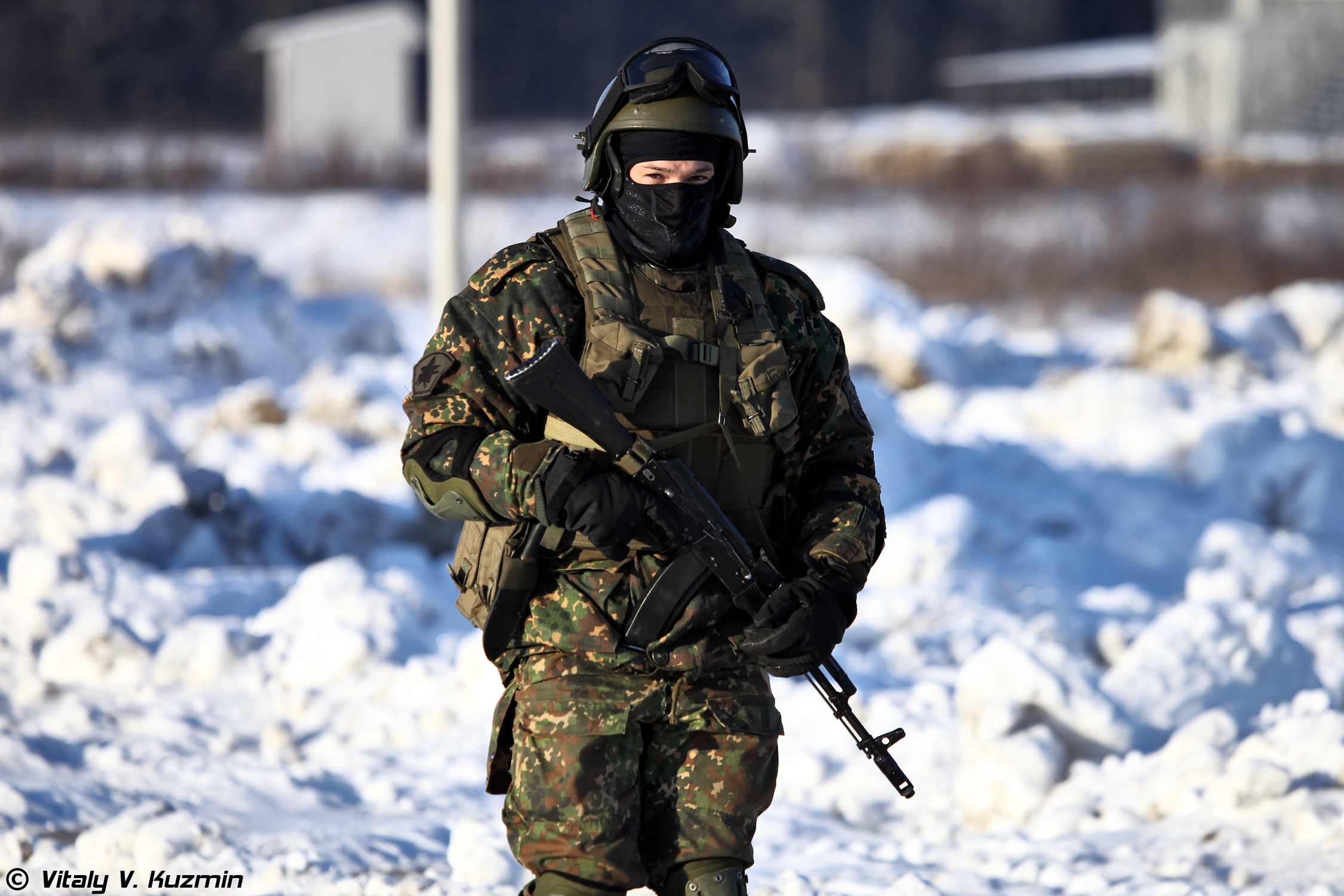
The honest conclusion is that the relationship between Izlom and Skol is genuinely disputed. The Russian sources mostly say one pattern, two names. The leading English reference splits them. Neither interpretation has produced a documented distinction, or a geometric identity, that everyone accepts. The terminology alone cannot settle it.
How to handle the terms
Given that the evidence does not settle the question, the safe and accurate position is this: Russian sources frequently treat Izlom and Skol as synonyms or alternate commercial names, while Western references sometimes distinguish them. The terminology alone therefore cannot reliably establish whether a particular textile is the same repeat, a colourway, or a related variant. Identification should rely on the actual geometry and provenance as well as the name.
In practice that means: do not assert that any given Izlom and any given Skol are the same drawing, and do not assert they are two distinct ones either. If a seller lists them as separate products, treat that as a commercial decision, not as proof of a genuine drawing difference. The naming is the murky part; the drawing and the provenance are what matter.
Other commonly confused pairs and triplets
Butan, Dubok and TTsKO: three names, one family, several countries
This is the richest source of naming disagreement in the whole subject, and it is worth being precise about the positions.
TTsKO is a description, “three-colour camouflage clothing”, that in the West became a pattern name applied to the Soviet and Russian three-colour woodland. It is a generic descriptor more than a firm designation.
Butan (from бутан, “butane”) is widely reported as the name of the camouflage-development project. Russian sources describe a “Butan” drawing adopted for the Soviet forces in 1984 and continued into the post-Soviet army; the Russian Wikipedia entry actually calls it “VSR-84 Butan.” The colour scheme is often described as an “amoeba”: light-green ground with green and brown shapes. The research that produced it ran under project themes during the early 1980s. Butan is widely reported as the name of the camouflage-development project, and the term was subsequently applied to the resulting design. Camopedia treats the project-name origin as reputed rather than firmly documented.
Dubok (“little oak”) is a nickname. In the English-language and Camopedia tradition, “Dubok” is the familiar name for the Russian VSR-93 three-colour pattern, the first widely issued Russian camouflage. But the Russian Wikipedia entry treats “Dubok” differently, as a modification of “Butan” made for the Ukrainian Armed Forces. So the same word means different things depending on whether the source is Russian or English.
The honest summary: a shared Soviet three-colour drawing produced in many variations across several countries, called TTsKO (description), Butan (project name), and Dubok (nickname) with country-dependent meaning. When you use “Dubok,” say which Dubok you mean, the Russian VSR-style or the Ukrainian modification, because the two readings are not the same.
VSR-93, VSR-98 and Flora
VSR-93 and VSR-98 are year-suffixed labels for two sequential Russian general-issue patterns. VSR-93 (per the retrospective VSR-93 label, circa 1991–1994) is the vertically oriented three-colour design nicknamed “Dubok,” “Barvikha,” “Vertikalka,” “Yolka” and “Arbuz.” VSR-98 (1998) is a Western/reference label for Flora, the horizontally oriented successor, nicknamed “Arbuz” again and “horizontal watermelon.”
So “Flora” is the drawing and “VSR-98” is the usual Western/reference label for it. And the year labels themselves come largely from an English book, so they are useful shorthand rather than official terms.
Berezka and KLMK
KLMK is the coverall. Berezka is the leafy drawing it carries. They are often used as if interchangeable, but strictly they are different types of name. Worse, “Berezka” is also attached by Russian sources to the vertical VSR-93, a different family altogether. So “Berezka” is a genuine source of confusion: it is the leaf pattern, but it is also a nickname for a woodland pattern.
EMR and “Digital Flora”
EMR is the digital pattern adopted in 2008. “Digital Flora” is an English retail nickname for it. The name is misleading precisely because Flora is a different, older pattern (1998) that EMR replaced. “Digital Flora” sounds like Flora redrawn in pixels; it is not. EMR and Flora are different drawings.

Partizan and SS-Leto
Here is a clean garment-versus-pattern case. Partizan (“guerrilla”) is the name of a style of uniform a particular cut of camouflaged suit. SS-Leto (“SS Summer”) is the name of the pattern on it, a drawing heavily influenced by the World War II German SS oak-leaf camouflage. There is also an autumn SS-Osen/autumn version and a reversible Partizan-M variant.
So when a source says “a Partizan suit,” it is naming the garment; when it says “SS-Leto,” it is naming the drawing. The two are routinely swapped by people who do not separate the two categories.

Sumrak: one word, several things
Sumrak (“dusk” or “twilight”) is a genuine multipurpose term. In at least three independent uses it points to different objects: (1) the KZS protective suit is colloquially called the “Sumrak” masking suit; (2) a Russian-made copy of the German sumpfmuster (marsh) pattern is sold as “Sumrak M2” by the firm BARS; and (3) various commercial summer and winter camouflage suits, from SSO, BARS and others, are marketed as “Sumrak.”
In each of these uses the name points to a different kind of thing. In the KZS case it names a garment (the masking suit). In the “Sumrak M2” case it is a product name for a copy of a German marsh pattern. In the commercial suits case it is a product-line name. What links them is not one shared “dark look” but the repeated use of a single Russian word for unrelated objects, there is no documented single official owner or design behind all three.
Why one camouflage can have several names
There is no single reason a Russian or Soviet camouflage carries multiple names. There are at least ten distinct mechanisms, and most famous patterns hit several at once. Here they are, with examples.
- Official designation vs nickname. The design had no formal name, so soldiers coined one. VSR-93’s folk names, Dubok, Barvikha, Vertikalka, Yolka, Arbuz, are far better known than any label the army used.
- Pattern name vs garment name. The coverall (KLMK) is a garment; the drawing on it (Berezka) is a pattern. The two get conflated.
- Programme name vs printed camouflage. Ratnik is a programme, Butan and Barvikha are research projects. The project name drifts onto the drawing it produced.
- Transliteration differences. The same Cyrillic word is romanized differently, giving TTsKO and TsKO, Yedinaya and Edinaja, Tsifra and Cifra. Same word, different letters.
- Literal translation vs established English name. The literal meaning and the accepted English term can diverge. “Berezka” literally means “birch,” but the English name favoured by collectors is simply “Berezka” or “silver leaf.”
- Manufacturer terminology. A company gives its own label to a drawing. Palma, from SPOSN, is a commercial name for a family of stair-step designs; it is not an army term.
- Factory terminology. Even the same drawing gets a factory code. The EMR fabric was coded “2979” on one textile mill’s runs, and the accepted pattern was “2979-8,” distinct from an earlier “2981” design.
- Commercial terminology. Sellers need a name that sells. “Digital Flora” is a marketing label; “Ruspat” mimics the American “-pat” naming; “Tetris” is a playful retail term.
- Regional usage. The same family is called one thing in Russia and another in Ukraine. Dubok is the clearest case.
- Production or colourway variation. One drawing comes in many colourways. VSR-93 exists in green-dominant and brown-dominant versions, and more. The name stays, the look varies.
- Family name vs individual variant. A family label is applied to members that differ. The leaf family covers grey-spotted and yellow-sand and golden variants under slightly different names.
- Repeated seller error. A mislabel, once repeated, becomes conventional. The IsoVSR/Flora confusion, the Izlom/Skol split, and the “CADPAT-derived EMR” claim all spread this way.
- Western retrospective naming. English books and collectors assign names to patterns the Russians never named. VSR-93 and VSR-98 owe their currency to the Desmond book.
Why one name can refer to several things
The reverse also happens: a single term points to more than one object. Four patterns account for almost all of it.
- A name for a garment and the pattern on it. KLMK names the coverall and then the drawing; the KZS suit takes its pattern from the leaf family.
- A name for a family with several colourways. Flora spans green, sand and khaki versions. VSR-93 spans green and brown. The name stays broad.
- A name for a programme, and the uniform it produced. Ratnik and ZDU name procurement or garments, but people read them as patterns.
- A name for several unrelated things. Sumrak is used for the KZS suit, a marsh-pattern copy, and commercial suits. Amoeba is both a Second World War drawing and an alias for the three-colour Soviet design.
The useful habit is to ask, in each case, what layer of the hierarchy is being named, and to keep that layer in mind. A single term is not intrinsically one thing; in the Russian system the same word reliably sits at more than one level of meaning.
How the terms are classified in this guide
To keep the whole subject manageable, this guide sorts every term by a single question: what does the term actually name? There are four answers, and the reference tables below are built around them. A term can slide from one answer to another over time, which is exactly what produces most of the confusion, but the starting question is always the same.
1. A camouflage pattern, or pattern family. The drawing on the cloth. Examples: Flora, EMR, the Berezka leaf design, Izlom.
2. A garment, uniform or oversuit. An article of clothing or a kit that wears a drawing. Examples: KLMK (a coverall), KZS (a suit), Partizan (a style of suit), ZDU, VKBO.
3. A programme, project, system or administrative designation. The effort behind the design. Examples: Butan (a development project), Ratnik (a soldier-system programme), Barvikha (a research name).
4. A retrospective, Western, collector or modern label. A term invented later to talk about or identify a pattern, not the name the army actually used. Examples: VSR-93, VSR-98, Digital Flora, TTsKO Woodland.
Two things are not categories here, and this matters. Whether a name is “official,” “military issue,” “manufacturer,” “commercial,” “collector,” “retrospective” or “disputed” tells you where the name came from and how trustworthy it is, it does not decide whether the term is a pattern, a garment or a programme. And the cloth itself (the fabric) is not a category either: a camouflage name attaches to a drawing or to an object, not to a mill’s product line. The “name status” column in each table keeps the origin visible, so you can read both things at a glance.
A chronological map of the terminology
The names changed because the situation changed. A short timeline makes the shifts legible without turning this into a catalogue.
- 1938, the amoeba drawing. The Soviet Union issues its early experimental camouflage for specialists; the abstract “amoeba” drawing (MKK) is the ancestor of much that follows. The word “amoeba” later reappears as an alias for the three-colour Soviet design, an early example of a name drifting across eras.
- c.1944–45, the three-colour suit (TTsMKK). Generally dated to 1944–45, although whether it saw wartime field use remains uncertain. The Soviet “three-colour masking camouflaged suit” whose drawing is a three-colour stair-step, often treated as an early predecessor to the later leaf family. In the post-Soviet market SPOSN’s Palma designs are described by Camopedia as modern reinterpretations of that stair-step drawing.
- Late 1950s–1960s, the leaf drawing. The stair-step / leaf camouflage that will later be called Berezka is developed and refined. The KLMK coverall is designed in 1968.
- Mid-1970s, the KZS. The protective mesh suit is issued to the chemical and radiation troops; its pattern belongs to the same leaf family. The “Sumrak” name appears in this context.
- Early 1980s, the three-colour project. Research themes (Ozyim, Levzeya) and the resulting three-colour drawing, later given the shorthand “TTsKO”, are developed; by 1984 it is adopted for the Soviet forces, reaching the airborne forces in Afghanistan from 1985.
- 1991, the VSR era begins (per the retrospective VSR-93 label). The Russian army, inheriting Soviet gear, develops the three-colour VSR-93; on the retrospective label’s dating it is issued broadly from 1994. The folk names Dubok, Barvikha, Vertikalka and Arbuz attach themselves. The Dennis Desmond book later gives it the VSR-93 label.
- 1998, Flora. The VSR-98 “Flora” becomes the general issue, with horizontal rather than vertical stripes. Again it is nicknamed “Arbuz.”
- 2004 onward, the commercial flood. Companies such as Magellan, SSO, Splav, BARS and Tactic-9 release the commercial designs, Izlom/Skol, Partizan/SS-Leto, Sumrak, Palma, and many tiger-type variants. The notion of a “pattern name” blurs badly.
- 2008, EMR. The digital “unified” pattern is introduced, and adopted broadly from 2011. It gets the code name “Tyomnyy,” the garment name ZDU, and a long string of consumer nicknames, Digital Flora, Tsifra, Tetris, Ruspat, Yudashka.
- 2008 onward, clothing systems. Ratnik (2008) and the VKBO all-season kit become the standard carriers for EMR, so the pattern is seen in the context of a programme rather than a named drawing.
As a rough pattern, the Soviet era tended to name objects, the post-Soviet era to name characters, companies and products, and the Western literature to add a final layer of convenient labels. But this is a tendency, not a tidy system. Part of the confusion is genuine error, labels that were misapplied, misheard or invented, then repeated until they looked authoritative. Not everything traces back to a coherent rule, and it helps to say so rather than force each case into one neat pattern.
Russian vs Western terminology
The same camouflage is described differently on the Russian side of the internet and the English side. Understanding that split explains a great deal.
Russian-language military and collecting sources name the object, use the Soviet supply acronyms, and favour folk nicknames that describe appearance. When they say “Berezka” they are pointing at the leaf drawing; when they say “KLMK” they mean the coverall; when they write “Butan” they are using a project name. They are also, crucially, working from a body of experience and documentation that English-language sources do not fully share.
English-language reference sites Camopedia chief among them, plus the collecting literature, tend to name the pattern. They apply the Desmond book’s labels (VSR-93, VSR-98), treat garment names as pattern names, and sometimes split one thing into two (Izlom and Skol). This is not dishonesty; it is a different way of organising knowledge, built on different assumptions.
The result is two overlapping taxonomies for one set of designs. A reader who only ever looks at English sources will believe there are more distinct “patterns” than a Russian source would recognise.
How mistranslation and repetition create false authority
A name can look authoritative even when its evidence is weak. The process runs like this. A Western label is coined, often by a collector or a book. It is copied onto a website. Another site copies it. A retailer adopts it because it gives the product a marketable identity. Within a few years the label is everywhere, and its origin has been forgotten. At that point it feels like a fact, even if no Russian document ever used it.
This is exactly the fate of several terms in this guide. “Digital Flora” and “Ruspat” are the clearest: both are convenient English names, and both would mislead anyone who assumes they are Russian. The same is true of the year labels VSR-93 and VSR-98.
The caution is worth repeating: popularity is not proof. A name’s frequency of use on the internet is a measure of repetition, not of provenance.
Why collectors and sellers keep mixing the terms
If the system is understandable, why does the field stay so messy? A few practical reasons.
- Retail needs a single product name. A shop cannot list “the Soviet three-colour woodland, sometimes called TTsKO, Butan, Dubok or VSR-93, depending on the source and the country.” It picks one name and runs with it. That one name then looks like the definitive one.
- People classify what they can see, not what is written. A seller looking at a garment identifies it by appearance and by the label on the shop tag, not by research into the supply document. So garment names and pattern names swap places.
- English sources are the easiest to quote. They are in the reader’s language, so they carry more apparent authority than a Russian document would. Their labels get copied even when a Russian source disagrees.
- Variants and colourways outnumber names. A single drawing appears in many shades, so two examples of “the same” pattern look different, and a person assumes they must be different patterns.
- The area genuinely blurred after 1991. In the commercial era, the same drawing was produced by multiple companies, each selling under its own name, and the distinctions between “the” pattern and “a” variant were never officially settled.
None of this makes the field unknowable. It means you should hold names lightly, ask where a term came from, and rely on the drawing and the context rather than on any single label.
Reference tables: what each term actually names
The four tables below replace the old single grid. Each answers the same questionwhat does the term actually name? for one kind of thing. The “name status” column shows where a name came from (official, documented, manufacturer, commercial, collector, retrospective, disputed). A term can be a genuine pattern and still carry a commercial or disputed name; nothing here implies otherwise.
Table 1, Camouflage patterns / pattern families. These terms name the drawing itself.
| Pattern / family | Cyrillic | Literal meaning | What the term actually designates | Name status | Modern alias / common confusion | Notes |
|---|---|---|---|---|---|---|
| Flora | Флора | “flora” (Latin “plant”) | The horizontally-striped general-issue drawing from 1998, the successor to the vertical VSR design | Official issue name | Also “VSR-98” (West) and “Arbuz” (watermelon); “VSR-98” is a Western label, not a Soviet name | In established use |
| EMR | ЕМР | “unified camouflage colouration” (expansion varies) | The pixelated/digital drawing common to all branches since 2008 | Official term; also the “Tyomnyy” code | “Digital Flora”, “Tsifra”, “Ruspat”, “Tetris”, “Yudashka”, modern labels | Established term; the expansion varies |
| Berezka / Berezhka | Берёзка | “birch tree” | The leaf/silver-leaf drawing printed on the KLMK coverall; also a nickname for the vertical VSR-93 in some Russian sources | Vernacular | Same word for two different designs depending on source; also “silver leaf”, “sun rabbits” | One word, two designs |
| Kamysh | Камыш | “reed, cane” | A tiger-stripe family drawing, green and blue variants | Vernacular | Confused with Tigr | In established use |
| Tigr | Тигр | “tiger” | A deliberate tiger-stripe adaptation | Vernacular | Confused with Kamysh | In established use |
| SS-Leto | СС-Лето | “SS summer” | The summer drawing of the Partizan suit; WW2 German oak-leaf inspired | Pattern name | “Partizan” (the garment) often mistaken for the pattern | In established use |
| Dubok | Дубок | “little oak” | West: the Russian VSR-93 three-colour vertical drawing; Russian sources: a Ukrainian modification of Butan | Vernacular nickname, country-dependent | Same word, two designs; always say which country | Read differently in Russia and in the West |
| Izlom | Излом | “fracture, fissure” | A Flecktarn-influenced commercial drawing; Russian sources treat Skol as its second name | Commercial | Izlom vs Skol, one design or two | Russian sources merge it with Skol |
| Skol | Скол | “chip, splinter” | A commercial drawing; Russian sources = usually the same as Izlom, while the Western reference treats it separately | Commercial | Skol vs Izlom | Russian sources merge it with Izlom |
| Amoeba | Амёба | “amoeba” | The WW2 abstract drawing; also an alias for the three-colour design | Vernacular | Same word, two meanings | One word, two meanings |
| Solnechnye Zaychiki | Солнечные зайчики | “sun rabbits” | The stair-step drawing on the KLMK coverall | Vernacular | Confused with Berezka / silver leaf | In established use |
| Kukla | Кукла | “doll” | A Russian DPM copy, a variant of the “Smog” drawing | Collector / commercial | Related to Smog | In established use |
| Palma | Пальма | “palm (tree)” | A stair-step family of drawings by SPOSN (Spring, Winter, Amoeba variants) | Manufacturer / commercial | Described by Camopedia as a modern reinterpretation of the Soviet TTsMKK stair-step design (a design relationship, not an identical repeat; see TTsMKK) | In established use |
Table 2, Garments / uniforms / oversuits. These terms name the clothing that wears a drawing.
| Garment / uniform | Cyrillic | Russian expansion | What it actually designates | Associated camouflage drawing(s) | Common confusion | Notes |
|---|---|---|---|---|---|---|
| TTsMKK | ТЦМКК | Tryokhtsvetnyi maskirovochniy kamuflirovanniy kostyum | A three-colour masking camouflaged suit, generally dated to 1944–45, a garment, not a drawing | The three-colour “stair-step” drawing printed on the suit; often treated as an early predecessor to the leaf family | “TTsMKK pattern” is Western shorthand, the term names the suit | Garment designation; the pattern reading is a later usage |
| KLMK | КЛМК | Kamuflirovannyy letniy maskirovochnyy kombinezon | A one-piece hooded camouflage coverall (1968) | Berezka / silver-leaf | Often treated as a pattern | Official clothing designation |
| KLM | КЛМ | (truncated form) | Most likely a shortened or loose form of KLMK; not a distinct design | (as KLMK) | Not a distinct pattern | Not an official designation |
| KZS | КЗС | Kostyum zashchitnyy setchatyy | An anti-flash protective-mesh suit, disposable, worn over a chemical-protective kit | Leaf/birch drawing related to the Berezka family (the design used on KLMK) | Former texts called this “a pattern close to KLMK”; it is a garment, the drawing is the leaf family | Official clothing designation |
| Partizan | Партизан | Partizan | A style of suit, not the drawing; Partizan-M is reversible | SS-Leto | “Partizan” mistaken for the pattern | Garment name |
| ZDU / Yudashkin | ЗДУ / Юдашкин | “protection to the limit” / designer name | A suit from Yudashkin’s workshop; “Yudashka” is a popular nickname | EMR | Designer/suit mistaken for a pattern | Garment / designer |
| VKBO / VKPO | ВКБО | VKBO / VKPO | A multi-layer all-season clothing set; outer layers in EMR | EMR | Not a pattern | Clothing-system name |
| TTsKO | ТЦКО | Tryokhtsvetnaya kamuflirovannaya odezhda | Literally “three-colour camouflage clothing”, a descriptive category of clothing/uniform; in modern Western usage it became shorthand for the drawing | Three-colour woodland (Butan / Dubok variants) | Used as a pattern name in the West | Descriptive clothing term that slid to a pattern name |
Table 3, Programmes / projects / systems / administrative designations. These name the effort behind a pattern, not the drawing or the garment.
| Term | Cyrillic | What it actually designates | Period | Associated drawing(s) | How it became attached to camouflage naming | Notes |
|---|---|---|---|---|---|---|
| Butan | Бутан | Project name for the camouflage development programme (mid-1980s); it became an early name for the resulting three-colour drawing | mid-1980s | Resulting Soviet three-colour drawing, no documented contemporary proper name; later shorthand “TTsKO”; “Dubok” only per its documented Russian/Ukrainian/Western usage | Per Camopedia, “reputedly” adopted from the project name; RU Wikipedia also calls it “VSR-84 Butan” | Project name used during development |
| Ratnik | Ратник | A soldier-system combat programme | 2008 onward | EMR | Not a drawing itself; it carries EMR garments | Programme name |
| Barvikha | Барвиха | Research / trial-period name for the early VSR(-93) designs over an eight-year test | late 1980s | VSR-93 | Named the design during development, then dropped | Development-period name, later dropped |
Table 4, Retrospective / Western / collector / modern labels. These are tools for talking about or identifying a pattern, not the name the army used.
| Modern label | What it is used to refer to | Pattern(s) it usually means | Origin of the label | Historical contemporary term (if known) | Why useful / why misleading | Notes |
|---|---|---|---|---|---|---|
| VSR-93 | The vertically-aligned three-colour woodland | Dubok (Western reading) | Western retrospective label (Desmond book, Camopedia); read as “Armed Forces of Russia 1993” | Dubok / the vertically-aligned drawing | Useful to cross-reference; misleading if read as a Soviet designation | Western retrospective label; the expansion is one reading |
| VSR-98 | The horizontally-striped Flora | Flora | Western retrospective label (English-language reference tradition) | Flora / “Arbuz” | Same pattern as Flora; misleading if read as a separate pattern | Western retrospective label |
| Digital Flora | The 2008 digital unified pattern | EMR | Modern commercial / reference label | EMR | The de facto name; misleading, implies a relation to the older Flora | Widely used; can mislead |
| Tsifra / Tetris / Ruspat / Yudashka | The 2008 digital unified pattern | EMR | Modern nicknames | EMR | Convenient; not official | Widely used nickname |
| 3-TsV / 3-Ts | “Three-colour camouflage” | Various three-colour designs (Soviet TTsKO, Russian VSR) | Widely used reference designation in collector and retailer usage | Handy way to group the three-colour variants; not a Soviet designation | Reference designation, not an official name | |
| TTsKO Airborne / Brown / Green / Mountain / Woodland | Particular colourways or variants of the three-colour design | The TTsKO / three-colour family | Modern collector and seller labels | Useful to tell variants apart; NOT historical designations | Modern labels, not historical designations |
Other terms you will meet
Beyond the headline names, a number of recurring terms add to the sense that the field is crowded. Most are garment or commercial names, which is precisely why they confuse. Attribution of individual designs to specific makers is rarely documented.
- SMK (специальный маскировочный комплект), waterproof summer and winter suits for MVD special forces, carrying a dense four-colour mottled drawing. A suit, not a pattern.
- KKO (комплект камуфлированного обмундирования), a 1992 camouflage clothing set for MVD special-purpose brigades, printing US ERDL/woodland-based drawings. A set.
- KM-P / “spetsnaz KLMK” a 1992 revival of the KLMK-style coverall for MVD brigades, produced in four drawings (desert, mountain, tundra, tropical). A garment.
- Podlesok (“underbrush”), a 1990s MVD pattern made in St Petersburg’s NPO Spetsmaterialy as an alternative to the VSR-93; the brown was replaced with black and the base lightened. Named for the ground flora it mimics.
- Rastr (“raster”), an early “two-frequency” camouflage built by laying a twisted meshy net over the Podlesok drawing, creating a “camo on camo.” Also sold as “Fazan” (pheasant) outside the original maker.
- Yeger / Yagel (“hunter”), a Russian drawing based on the Finnish M05 forest design, made by Tactic-9 and others. A commercial name.
- Tochka / Tochka-4 (“dot”), commercial patterns based on the Danish M84, made in several versions.
- Ryab (“ripple”), a commercial pixelated pattern with an overprinted brown-and-white effect.
- Toros a commercial snow drawing based on the Berezka shapes for cold conditions.
- Flectar-D a lightened Danish-style pattern by Tactic-9; also called Ryaska, Sever and Tochka.
- Gorod / Les (“city” / “forest”), an early-1990s pattern based on US woodland drawings, with an urban (grey) and a woodland (green) colourway. The names name the colourway, not two different drawings.
- Mokh / Moss and Sand Russian commercial adaptations of the American A-TACS designs; “Mokh” copies the woodland version, “Sand” the desert one. The Russian rendering of the A-TACS name is “Ataka.”
- Klyaksa (“ink blot”), a white winter suit with dark green blotches, common across the post-Soviet space.
The consistent theme is that a great many of these are garment or company names wearing a pattern, or colourway names for a single drawing. Once you can classify a term as a garment, a company label, or a colourway, most of the apparent chaos resolves.
One final recurring example deserves emphasis. The old Soviet name for the general issue was often simply kamuflirovannaya odezhda “camouflage clothing”, and the modern Russian for the general issue is edinyy maskirovochnyy risunok. These plain functional phrases, and their many abbreviations, are the true backbone of the naming system. The colourful names sit on top of them.
Quick rules for reading Russian camouflage names
To close, here is a checklist you can carry into any identification problem.
- Re-establish the Cyrillic. If two English names look different, check whether they transliterate the same Russian word. If they do, they are the same thing, do not create a new pattern from a spelling difference.
- Decide what is being named. Is it a drawing (pattern), a coverall or suit (garment), a whole kit (system), a research project (programme), or a company (manufacturer / commercial)?
- Prefer the drawing over the garment. When unclear, ask which layout the name is attached to, not which label is printed on the tag.
- Do not promote a nickname to a designation. “Dubok,” “Flora,” “Berezka,” “Kamysh,” “Partizan,” “Skol” and “Izlom” are colourful names. Unless a document uses them, call them what they are: folk or commercial names.
- Treat English book labels as labels. VSR-93, VSR-98 and “Digital Flora” are convenient English terms. They are not necessarily what the Russian army said.
- Specify the country. “Dubok” means one thing in Russia and another in Ukraine. Always say which.
- Flag uncertainty honestly. Where the evidence genuinely conflicts, Izlom vs Skol, the expansion of VSR, the dating of EMR, say so rather than pick one reading and present it as fact.
- When in doubt, ask where the name came from. A term from a military document is a designation; a term from a marketplace listing is a label.
Conclusion
Russian and Soviet camouflage nomenclature is not a wall of inconsistency. Much of it follows the habit of naming objects, characters and companies before drawings, a strong and widespread tendency, not an absolute rule. The confusion many collectors feel comes largely from reading that habit through an English assumption that a name always names a pattern. But not all of it is a lens effect: some of it is retrospective, some commercial, some colloquial, and some simply wrong. Keeping those apart matters as much as separating a garment from a drawing.
The practical fixes follow. Separate the garment from the drawing. Separate the official designation from the nickname. Separate the Russian sense from the English sense. Re-transliterate when two names look different. And when a term is disputed, say so rather than pick one reading and present it as fact.
Do that, and the vocabulary that once looked chaotic resolves into something readable. The names stop being a list of interchangeable and contradictory terms and become a layered code, the coverall under the pattern, the project behind the design, the manufacturer beside the drawing, and the book label on top of it all.
Understanding the naming system is not a detour from understanding Russian camouflage; it is the quickest route to it. Because by the time you can name a thing correctly, you already know what it is.
Where to explore further
For the historical background behind the leaf patterns, read our companion article on Soviet leaf camouflage (KLMK and Berezka). To see the patterns themselves, browse the Russian camouflage range, the Soviet-leaf and KLMK collection, or the VSR Dubok collection.
