
Camouflage History
Arbuz “Flora”: The Watermelon Pattern of the Russian Army
Russian soldiers rarely used the names that appeared in the supply documents. They named camouflage by what it looked like to a conscript standing in a muddy field: birch tree, oak, watermelon. Watermelon, arbuz, is the nickname that stuck hardest, and it is attached to the pattern that dressed the Russian Army for roughly a decade on either side of the year 2000.
The joke is that the nickname is older than the pattern. Russian accounts of the period are consistent on one point that most Western summaries miss: the word arbuz was already in use for the stripe-dominated camouflage of the early 1990s before the pattern known in English as VSR-98 “Flora” existed at all. When the new pattern arrived, soldiers did not invent a fresh name for it. They attached a qualifier to the old one. The vertical watermelon gave way to the horizontal watermelon.
That detail is not trivia. It is the key to what the pattern actually was.

A Nickname Older Than the Pattern
The pattern that came before is usually called VSR-93 in collector literature, and “Barvikha” in Russian accounts of its development programme. Its blobs are large and vertically aligned. Russian specialist writing on the subject describes the troops receiving it in the early 1990s and reaching immediately for the word arbuz, alongside other nicknames drawn from the same visual logic.
It is worth being precise here, because the precision is the whole story. The claim that the nickname “watermelon” existed for the vertical pattern before it was applied to the horizontal one rests mainly on Russian specialist accounts of camouflage history rather than on any single archival document. The Russian-language Wikipedia article on the Flora pattern repeats the watermelon nickname for Flora itself, but the page carries maintenance warnings that it lacks references. The nickname is therefore best recorded as long-standing and consistently attested military usage rather than as a documented official designation. Nobody in the documentary record says a ministry circular named it.
What is not in doubt is that the nickname describes a shape, not a colour. There is no documented connection between “watermelon” and the red flesh or black seeds of the fruit. Russian accounts discussing the nickname consistently point to the stripes, and to the way those stripes run. Anyone who has seen the pattern in the field will recognise the logic immediately: the light bands crossing the darker green ground do read as the stripes on a watermelon rind, viewed from a distance and in poor light.
What a Watermelon Actually Describes
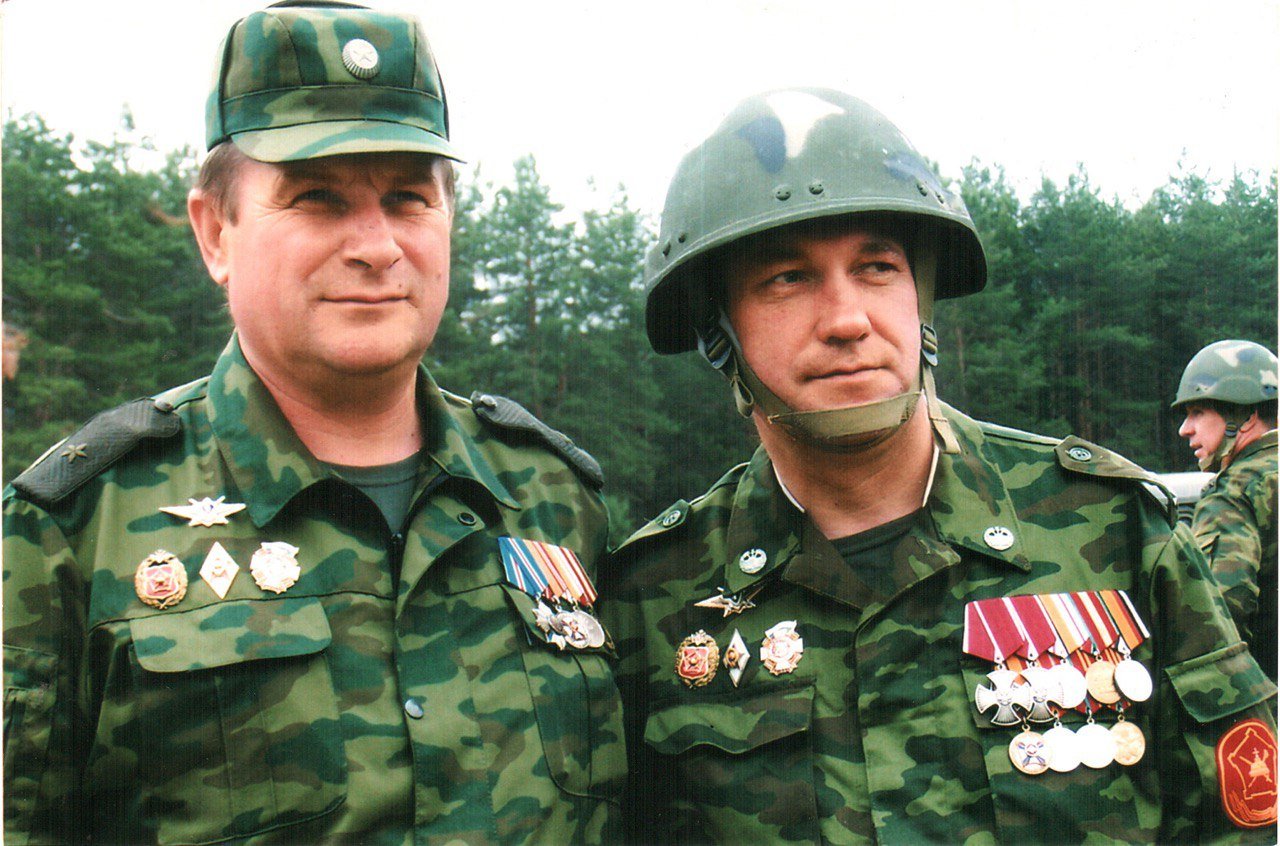
Here the reader needs the pattern itself, not a description of it. Flora is built on a green ground carrying darker green and brown blotches, and across that ground run elongated light tan or pale khaki bands that stretch horizontally. The bands are long, roughly parallel, and irregular in width. The blotches are not scattered at random the way they are in a classic flecktarn spot pattern; they are gathered and stretched along the horizontal axis.
This is where a genuinely common Western error needs to be corrected rather than repeated. Several English-language commercial pages describe the Flora pattern as consisting of vertical brushstrokes. That description belongs to the pattern Flora replaced. The Russian-language sources and the Camopedia entry on Russian military camouflage describe the development of Flora as a deliberate move from vertical alignment to horizontal alignment, and the photographs bear it out: put a 2007 airborne inspection and a 1993-pattern photograph side by side and the axes are not ambiguous.

The Geometry Was the Point
Why would anyone move stripes from vertical to horizontal? The answer given by Russian specialist accounts is not aesthetic and not historical, it is a claim about how camouflage behaves when the person wearing it moves.
The account, which appears in a Russian specialist survey of modern camouflage design and is mirrored on an encyclopaedic Russian site, states that the development of the pattern took into account research into the dynamic effectiveness of camouflage, meaning the property of a camouflage pattern not to lose its function while the object it covers is in motion. According to that research, horizontal bands help preserve the masking function during movement, while vertical ones tend to give the wearer away.
That claim should be handled with care. It circulates in Russian specialist writing of the 2000s and is repeated in the same wording on two sites that are effectively one text. No primary research document has been located. It is best described as what Russian specialist accounts say about the design intent, not as laboratory proof, and it is notable that the claim is about intent and mechanism, both of which are easy to assert and hard to falsify.
Still, if the claim about design intent is taken as the pattern’s own story, then “watermelon” is a remarkably apt piece of soldier slang. The conscripts who coined the nickname were pointing at exactly the feature the designers had selected for a functional reason. Soldiers are not usually that precise. In this case the shape that made the pattern technically interesting was also the shape that got the pattern its name.
What the Russian Soldier Actually Wore Before EMR
The second half of the question, what the army actually wore before the pixelated EMR pattern arrived, is where most short accounts of Flora collapse into a tidy ladder that the sources do not support.
The starting point is not camouflage at all. The everyday field clothing of the late Soviet period was the afghanka: a field uniform whose name comes from Afghanistan, and which was worn in a plain khaki colour rather than in a printed pattern. The important point for nomenclature is that “afghanka” names a cut and a service career, not a camouflage design. It is the kind of word that gets used loosely in English to describe a village version of Soviet camouflage generally.
Before and alongside it sat the three-colour pattern known in Russian accounts by the programme name Butan, with the nicknames dubok and berezka, and known in Western collector literature as TTsKO. Its colours overlap heavily with what came afterwards, and the details differ sharply, a distinction worth keeping in mind, since a Russian “berezka” can point at more than one unrelated thing depending on who is speaking and which decade they mean.
Then came the vertical pattern. Russian accounts place its introduction in the early 1990s, sometimes specifying 1993 because that is the year it is said to have been taken into supply. Camopedia places the beginning of issue in 1991, with the airborne troops first in line and wider distribution arriving around 1994. The two are not reconcilable, and it is not necessary to force them: the published accounts agree that the vertical pattern entered service in the early 1990s, with sources differing between 1991 and 1993 on the precise date.

That plurality is the point that a simple version of this history loses. One pattern in general supply did not mean one pattern on the ground, and it never did. The Russian camouflage literature for the decade around 2000 lists a crowd of contemporary patterns: residual stocks of the vertical pattern, Butan-family uniforms, special-purpose patterns, and copies of German flecktarn that appeared with airborne and security units in the middle of the 2000s. Add the anti-flash KZS oversuit, the silver-leaf “berezka” of the 2000s, and the separate supply arrangements of the Interior Ministry, and the picture of a single national pattern becomes impossible to maintain.
Flora was the pattern of general issue. It was never the pattern of everyone.
1998: The Pattern With Two Names and One Problem
The pattern is dated to 1998 by Russian and Western sources alike, adopted as the main general-issue pattern and replacing the vertical pattern that had preceded it. It is often described as having been developed specifically for the central Russian landscape, and Russian sources describe it as less well suited to the Caucasus mountains than to the plains.
The naming is where the article has to slow down, because there are at least four names in circulation and they do not mean the same thing.
The first is Flora, the word soldiers and Russian specialist sources use. One Russian specialist survey goes further and describes Flora as the pattern’s name, unusual among Russian camouflage patterns in having a name at all, rather than only a numeric code. This rests on a single account, so it is best reported as “Russian specialist sources describe it this way” rather than as an established official fact.
The second is VSR-98. It looks like an official index; it is not. The Russian-language article on the pattern traces the designation to Western reference literature, specifically books on Soviet and Russian camouflage uniforms, and the English-language Wikipedia article on the pattern notes that it is sometimes erroneously called VSR-98. In other words, the most commonly used English label for this pattern is a retrospective convenience that hardened into a fact through repetition.
The third is 3-TsV, meaning “three colours”, a compact way of describing a family of three-colour Russian patterns. The trap is specific: Camopedia uses VSR 3-TsV for the pattern of 1993, not for the pattern of 1998. A catalogue label that runs “Russian 1998 3-TsV” fuses two different patterns into one string. It is a commercial shorthand, and it should be read as one.
The fourth is the soldier’s name: arbuz, and more specifically gorizontalnyy arbuz. This one is not an index, not a code, and not a marketing label. It is what the people wearing it called it.
On the relationship with its predecessor, the sources support a design relation and not an identity. Camopedia is explicit that the shapes in Flora were enlarged and aligned horizontally, and that the previous pattern’s drawings were not copied precisely. That is the level of claim the evidence carries. “Design relation, not repeat identity” is the accurate formulation; “the same pattern turned sideways” is not, and neither is “direct modification”, unless one is describing the visual impression rather than the technical record.
In Service, 1998–2008
For roughly a decade, Flora was what Russian soldiers wore in the field. The encyclopaedic literature associates it with the second Chechen war and with the exercises, deployments and peacekeeping rotations of the 2000s.
One of the most photographed Russian deployments of the period was the Kosovo contingent, and the photographs from the summer of 2001 show airborne troops in green-and-tan camouflage with blue berets during the formal events that accompanied the diplomatic attention the deployment attracted. Those are ceremonial photographs of a formation: they record the colours of the uniforms and the berets, and the structure of the drawing is still visible on the marching troops, even on the men furthest from the lens, while the officials in dark single-colour dress uniform and the civilians in plain suits read as unbroken colour. That is the everyday condition of camouflage photography, and the reason a uniform seen in a news picture is so often misread.
The pattern also travelled outside the Russian armed forces. Belarus used it and later replaced it; Tajikistan moved to the digital pattern; Kazakhstan and Kyrgyzstan saw limited use. Ukrainian forces used it in limited quantities. By the 2010s the pattern had become a marker of the separatist side in eastern Ukraine, and it appears in the equipment of units of the self-declared republics, of irregular formations and of at least one Russian volunteer grouping. That is a factual record about who wore what, and it is worth stating plainly for the same reason pattern affiliation is stated plainly throughout: in a photograph, the pattern is often the only hard evidence available, and it should not be muddled.
For a period of this era, a photograph of Russian troops could be read almost as a calendar. Vertically aligned blobs meant the early 1990s or surviving stock. Horizontally aligned bands meant the general-issue pattern of the 2000s. Coarse digital squares meant the future.
The Mountain Problem
A pattern optimised for the central Russian landscape is not, by construction, a pattern optimised for the Caucasus. Russian sources note that the standard variant is not well adapted to the mountains, a point of some consequence, since the Caucasus was the most common operational environment for Russian troops during the pattern’s years of service.
The answer was a colourway rather than a redesign. Russian specialist writing describes a version of Flora in which the ground is not light green but dark yellow, sand or khaki. The stated reason is ecological: in the North Caucasus Federal District the grass burns off from June and keeps a yellowish cast through the summer, so a green-based pattern stands out against ground that has gone pale. The colourway, not the geometry, was what changed.
The photography from the 33rd mountain brigade in 2007 shows what this looks like in practice, and it is a useful corrective to the notion that a camouflage pattern is a fixed thing. The blink shape and size are familiar from the green version; the ground underneath them is a pale sand, and the overall impression of the uniform at a distance is closer to a desert pattern than to the woodland pattern the same drawings produce in green.
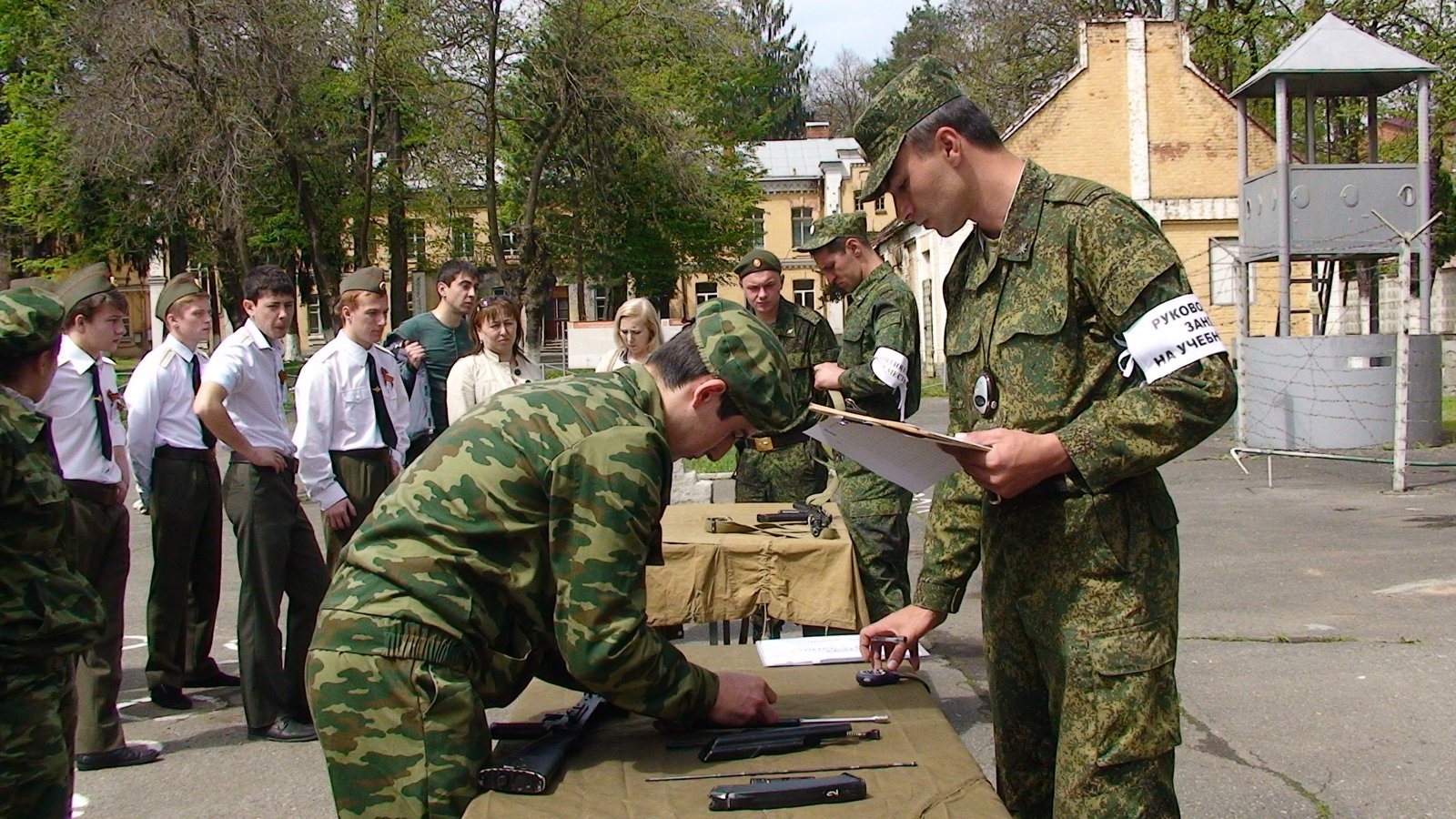
Whether the mountain colourway was ever a separate supply item under its own index is a different question, and one the published accounts do not settle. Russian collector lists give the variant names such as “Gornaya Flora”, mountain Flora, and “Ryzhukha”, and the Russian Ministry of Defence has itself published imagery of mountaineering equipment under the heading “Mountain Flora”. None of that establishes an official index. The safest reading is that a pale-ground colourway was produced and used, that the North Caucasus was where it mattered, and that the formal administrative status of the variant is a collector’s question rather than a documented supply fact.
The Watermelon That Outlived Its Replacement
The pattern that replaced Flora is the one English-language readers know best, because it looks like the future: the EMR, universally nicknamed “the digital one”, tsifra, and known in English as Digital Flora. The timing is stated differently by different sources. Russian specialist accounts date its appearance to 2008 with adoption the following year; Camopedia places its introduction in 2008. The pattern that followed Flora is therefore best dated to the closing years of the 2000s, with the changeover running into the early 2010s.
The handover from Flora is described in the same imprecise way. One Russian account states that Flora was withdrawn from supply in 2009, adding that other data put it in 2011. English-language reference material, drawing on a Russian Ministry of Defence release, puts the replacement at “by 2011”. A careful article says what the sources say: Flora was withdrawn in the late 2000s, with accounts differing between 2009 and 2011 on the year.
Two ironies deserve their place here. The first is lexical. The most widely used English name for the successor, Digital Flora, is a calque of the Russian nickname tsifrovaya flora, which is itself built on the name of the pattern it replaced. The name outlived the pattern. The second is practical. A pattern being withdrawn from supply is not a pattern being removed from the world. Flora continued to appear in Crimea in 2014 and in the Donbass conflict, and it remained in use in some military institutes and on parade.
How to Tell a Watermelon in a Photograph
Camouflage identification from photographs is a discipline with a short leash, and this pattern is a good test case. Four practical rules, each of which follows from something established above.
First, read the axis before you read the colours. Vertical alignment points to the earlier pattern; horizontal alignment points to Flora. This single test resolves most misidentifications, including the commercial pages that describe Flora as vertical.
Second, do not treat the palette as the identifier. The pale-ground mountain colourway and the standard green version come from the same drawings, and the fabric used by a given manufacturer shifts the colours further. A pale “Flora” is not automatically a different pattern, it may be a different ground colour of the same one.
Third, check for digital ticks. If the shapes have flat edges and repeat at small regular intervals, you are looking at a pixelated pattern, not at this one. Several freely available photographs of Russian troops in the 2010s show the pixelated pattern, and the descriptions attached to those images do not always say so.
Fourth, be sceptical of tags. Category labels on image repositories are administrative, not proof. A photograph of Georgian soldiers taken during the 2008 war sits inside a Flora category on at least one repository, the uniforms in the frame are not the same thing the category says they are.
The wider lesson belongs to the naming. Naming in Russian camouflage runs on at least four parallel tracks, official index, programme name, collector designation, and soldier slang, and this pattern is a case where the slang has proved more durable and more useful than any of the codes. For readers who want the general machinery, Soviet and Russian Camouflage Nomenclature, Explained sets out how the systems interact, and How Camouflage Is Classified: Morphology, Family and Lineage explains why “design relation” and “repeat identity” are not the same claim.
Two related patterns are worth reading alongside this one. The pattern Flora replaced is covered in Russian VSR “Dubok”: The Pattern That Emerged From the Soviet Collapse, and the pattern that replaced Flora in EMR (Digital Flora): The Pattern That Pixelated the Russian Armed Forces. For the confusions of Russian pattern nicknames, the leaf patterns that share the berezka name are treated in Soviet Leaf Camouflage: KLMK, Berezka and the “Sun Bunnies” the West Never Understood.
Clothing and accessories in this pattern are in our catalogue: Russian Arbuz Flora.
