
Pattern Guides
How Camouflage Is Classified: Morphology, Family and Lineage
Two patterns can look almost identical, and have nothing to do with each other. The opposite is also true: two patterns that look clearly different can be part of the same documented family. This is the single most common source of confusion in camouflage. The fix is to stop using one word, “type”, for three very different things, and to keep them separate.
One word, three axes
When people say a pattern is the “same type” as another, they usually mean one of three different things. Grouping them under a single label is what produces the myths, the claim that Flecktarn is just a modern “pea dot,” or that DPM is part of the Woodland family, or that Tiger Stripe and French Lizard are unrelated just because they look different.
Three axes need to be kept apart:
- Morphology how a pattern is built (its shape grammar: dots, leaf blobs, splinters, brushstrokes, pixels). This is a visual/structural classification.
- Family / lineage a pattern’s documented historical descent. Who designed it, from what, when. This is the only axis that tells you whether one pattern genuinely derives from another.
- Nomenclature the name a pattern goes by, and who gave it that name (an army, a manufacturer, or collectors decades later).
And there is a fourth thing that is not a classification axis at all:
- Visual resemblance two patterns may simply look alike, for reasons of palette, scale, or a shared visual convention, without being related. Resemblance is an observation, not a lineage.
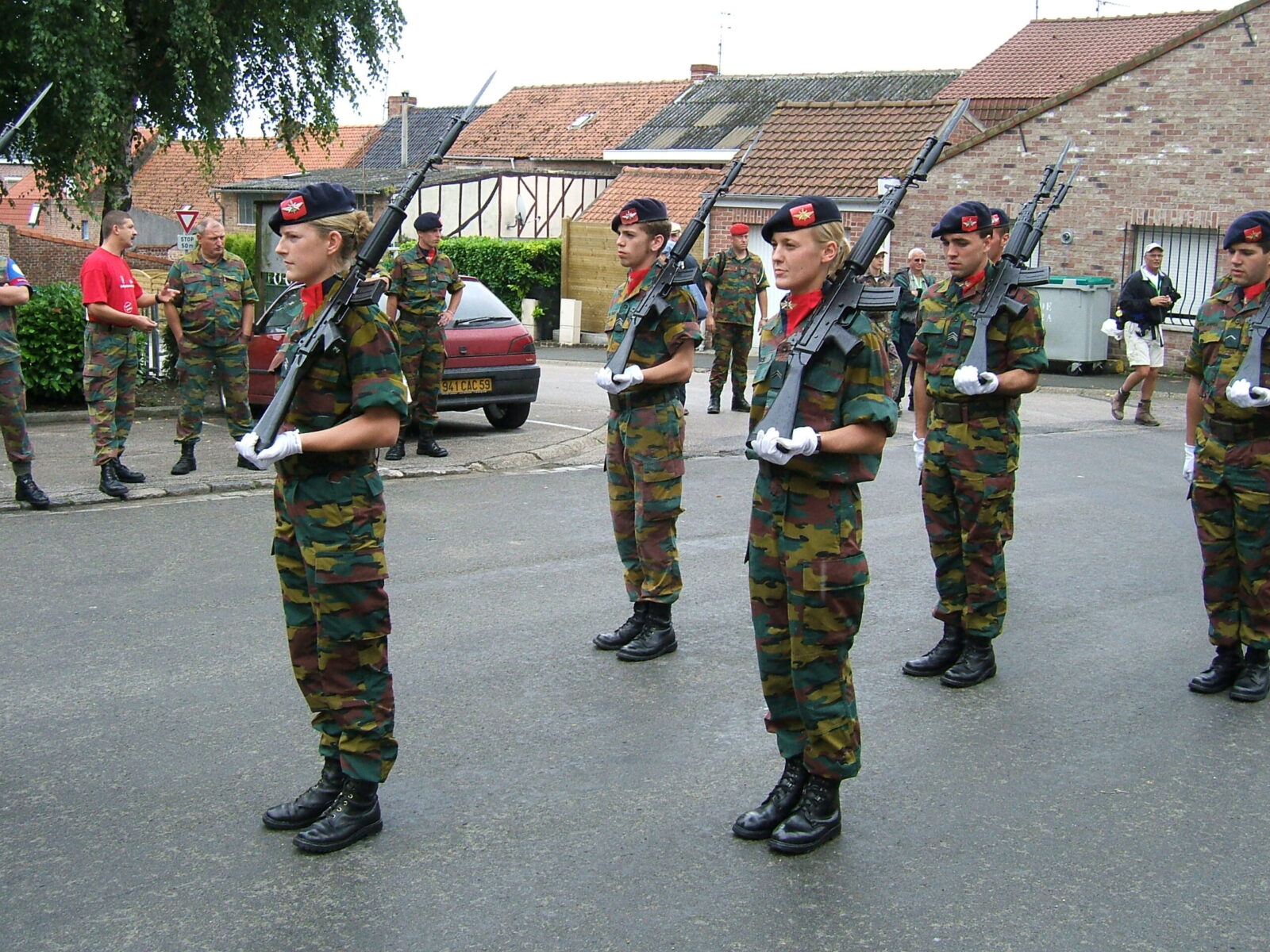
Axis 1, Morphology: how a pattern is built
Morphology is the shape grammar. It answers “what do the elements look like?”, dots, closed leaf shapes, hard-edge splinters, soft organic blobs, brushstroke streaks, or digitised squares. It is the most useful starting point for identification, because it is a purely visual read you can make from a swatch or a photograph.
The danger: morphology is the axis that produces false families. Lots of unrelated patterns share a shape grammar, because certain shapes simply work for a type of terrain. The classic error is to look at a soft-edged, green-and-brown pattern and call it a “leaf pattern,” then assume it must descend from the American ERDL.

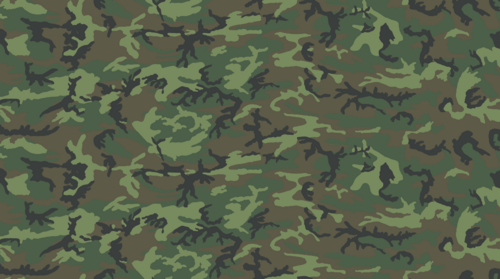


Notice the trick. The Flecktarn (dots) and the ERDL (leaf) share a palette and both work in temperate forest, but their morphologies are completely different. The Sumpfmuster and the Splitter pattern are both German and both from the Second World War, but one is soft-edged and the other hard-edged, a difference of morphology, not of descent.
Axis 2, Family / lineage: where a pattern actually comes from
Lineage is the only axis that tells you whether one pattern derives from another. A family is a chain of descent: a designer, a country, a production decision, a date.
The Flecktarn chain: Flecktarn → T/78 → M/84
The Danish M/84 is frequently described as “a copy of Flecktarn.” That is true, but it skips the step that explains how. The trail runs through the German Flecktarn B (developed by the firm Marquardt & Schulz and selected after the Bundeswehr’s 1976 Truppenversuch trials), to a Danish trial version called the T/78, presented in 1978, and only then to the M/84 adopted in 1984.
The T/78 was never adopted, it was a test uniform. But the experience gained with it went directly into the M/84, which kept the same shapes and reduced the palette from five colours to three (olive green, light green and black) to better match Danish woodland. So the correct chain is Flecktarn B → T/78 → M/84, not simply “Flecktarn B → M/84.”
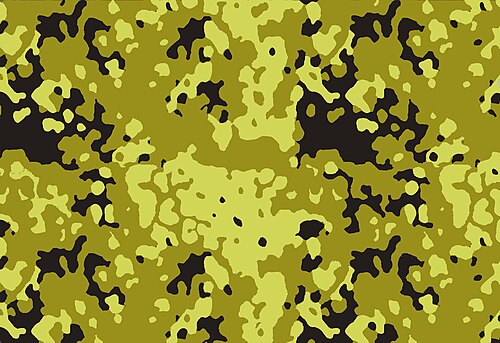

This is why the Flecktarn story matters for identification: several patterns that look alike share this chain, and several that share the dot morphology do not.
The brushstroke chain: Brushstroke → Lizard → Tiger Stripe
Here is where separating “morphology” from “family” gets delicate. As morphologies, British Brushstroke, the French Lizard and the Vietnamese Tiger Stripe are three distinct things, different widths, different layering, different dithering. Lizard and Tiger Stripe especially are often confused in photographs, and for identification you should treat them as separate morphologies.
But as a family, they form one documented line of descent. The brushstroke concept originated with the British, most famously on the Denison smock. That concept moved into the French Lizard and the Lizard in turn became the direct ancestor of the Vietnamese Tiger Stripe (known as Sọc Răn).
So: three distinct morphologies, one documented family. Saying “they are distinct families” would be wrong; saying “they are unrelated” would be wrong. The accurate statement is “distinct morphologies within one documented lineage.”
This same logic separates the British DPM from the American Woodland family. DPM is not a leaf pattern and does not descend from ERDL. It is a British design developed in the early 1960s, and its relationship to the earlier Denison brushstroke is best described as the continuation of a national disruptive tradition not as a demonstrated graphic derivation. Keep that distinction: DPM belongs to British tradition, ERDL and Woodland to the American leaf family.
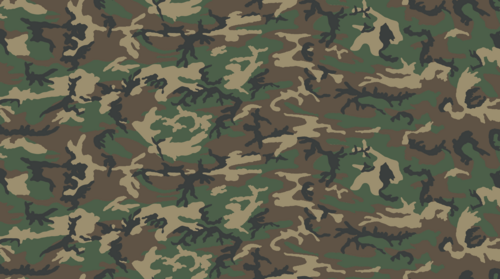
Axis 3, Nomenclature: who gave it that name
A pattern’s name is not a reliable guide to what it is. Different authorities name the same design differently, and the same word can describe two different things. The most useful separation is: official name (the army’s designation), common name (what collectors and the trade call it), and garment name (the name of the clothing, not the pattern).
The German desert pattern is the textbook example. Officially, the Bundeswehr’s desert camouflage is called Wüstentarn (“desert camouflage”), a three-colour pattern. But the word Tropentarn (“tropical camouflage”) was first used, informally, for the desert pattern introduced in 1993, before the name settled on Wüstentarn. To make things harder, Tropentarn is also an official term for something else entirely: a lightweight tropical fabric printed with the temperate five-colour Flecktarn.
So “Tropentarn” points to two things, the light tropical fabric carrying the temperate Flecktarn, and (in informal/older use) the 1993 desert pattern. Non-German sources often swap the two. This is a nomenclature problem, not a design problem: the patterns themselves are clear.

The same trap appears across camouflage. A garment designation like “TAP” names a tenue, not a pattern. A collector label like “Platanen” or “Eichenlaub” is a post-war nickname, not a wartime official name. Nomenclature is where myths thrive.
The fourth thing, visual resemblance is not a classification
The easiest error to make is to treat looking alike as being related. There are dozens of patterns that resemble each other across entirely separate families, drawn together by a shared palette or a shared visual convention rather than by descent.
Three recurring cases:
- DPM vs Woodland often described as “the same leaf family.” They are not. DPM is a British design; Woodland descends from ERDL. They are compared because they were the two dominant temperate patterns of the late 20th century, not because they are related.
- Tropentarn vs Wüstentarn a nomenclature collision, not a design one. Identified above.
- Sumpf vs splinter the 1943 Sumpfmuster (soft edges) is grouped with the 1931 Splitter pattern (hard edges) because both are German WWII patterns. They share a history but not a morphology.
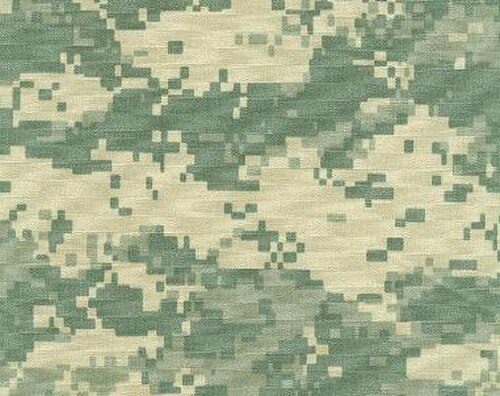
This is why the UCP story and the MTP story are worth reading separately: they teach that a method (pixelation) and a design (palette, scale, environment) are not the same thing.
Putting it together: a quick classification key
When you meet an unfamiliar pattern, ask four questions in order:
- What is its morphology? Dots, leaf, splinter, soft-edge, brushstroke, pixel?
- Who designed it, and from what? Is there a documented lineage, or only a resemblance?
- What is it officially called? As opposed to its collector/trade nickname, or the garment it is printed on?
- Could it be a false family? Does it look like something it is not actually descended from?
Morphology helps you identify; lineage tells you whether it is related; nomenclature keeps the names straight. Resemblance alone proves nothing.
Where to go next
This guide is the hub of the Pattern Guides series. Each comparison article below takes one family and shows how to apply the two axes:
- Flecktarn and its spot derivations (including M/84 and Tropentarn)
- ERDL and Woodland, the American leaf family
- AUSCAM, the Australian disruptives
- French Lizard and Tiger Stripe, one lineage, distinct morphologies
- Soviet leaf patterns
Exploring the patterns themselves? Browse the camouflage collection at MegaCamo, where every pattern is identified by its official and common names.
