
Camouflage History
Norway’s M75 and M98: One Camouflage Drawing for Rock, Forest and Snow
Norway has dressed its soldiers in the same camouflage drawing for half a century. It is built from large, rounded patches of dark olive green, light green and tan, and in Norwegian it is simply called norsk skog, the Norwegian forest. Two uniform models carry it most visibly: the M75 field uniform introduced from 1975, and the M98 work uniform introduced in 1998. The drawing barely moved between the two. The colours, the cloth and the cut did.
One drawing, two sets of colours
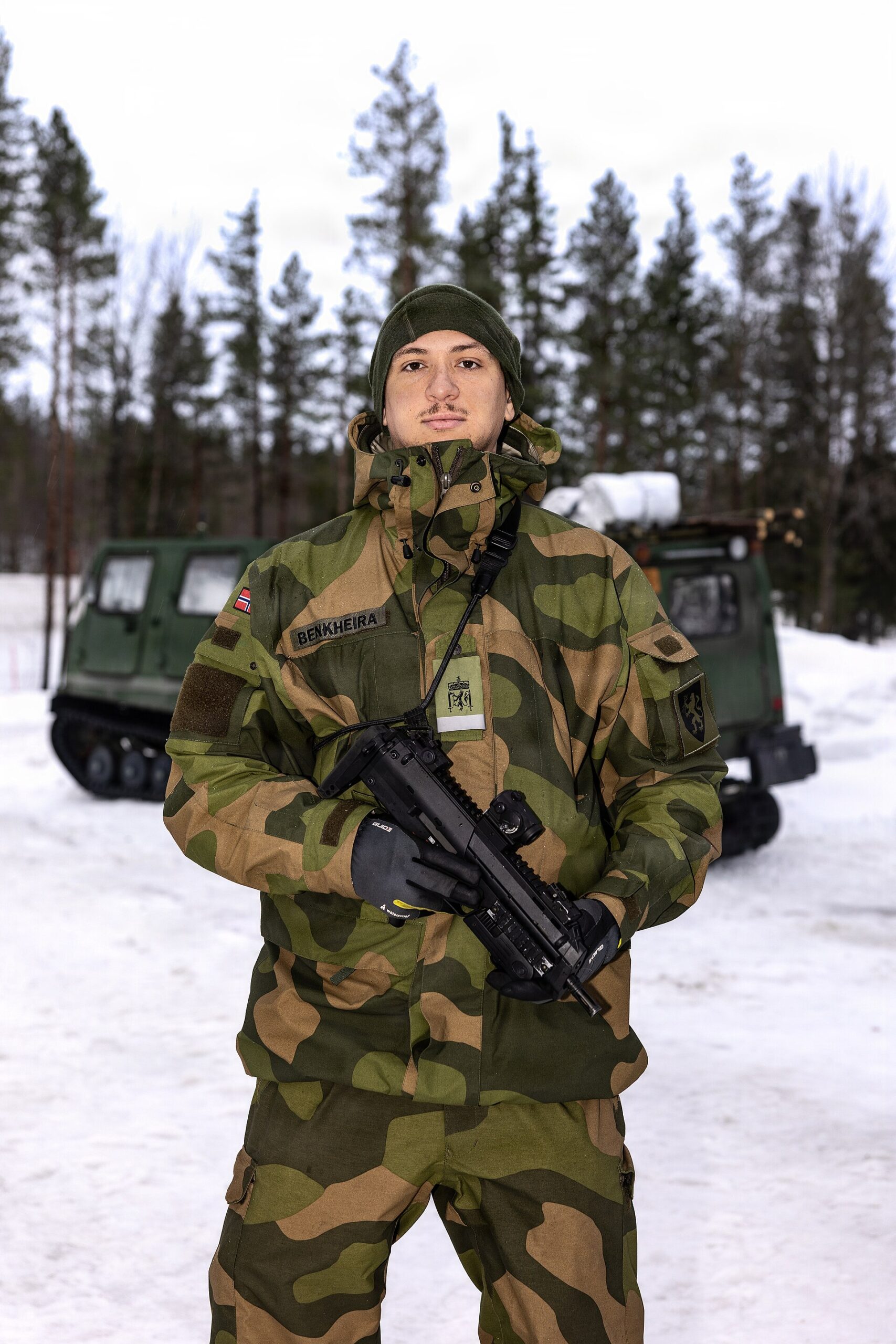
The print is a three-colour disruptive pattern. Its shapes are large and mostly rounded, with a few short straight edges where two colours meet. It does not try to imitate leaves, branches or stone. It works the way a disruptive print is meant to work: at a distance the outline of the soldier breaks up into patches that read like the ground behind him.
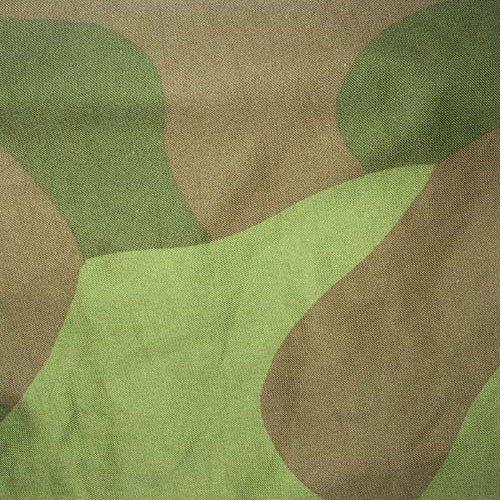
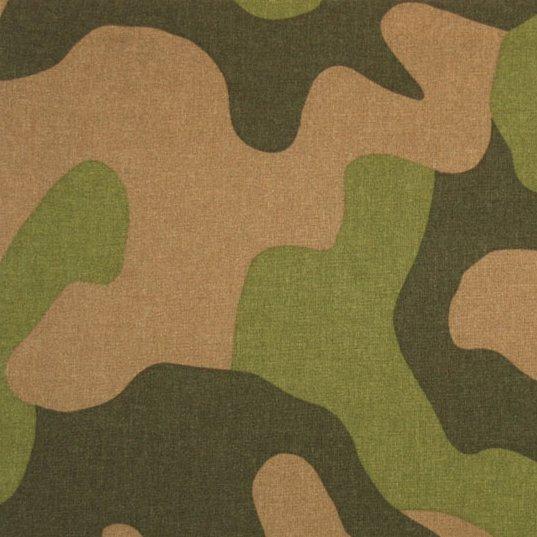
The lightest of the three tones, a tan, does much of the work: it alters the overall effect of the uniform once the soldier is seen from a distance. That is also why the pattern is hard to pin down from a photograph: the shades vary appreciably from one garment to another and from one fabric to another, and a single jacket is a poor colour reference for a whole production run.
Before the forest print: white suits and shelter-half tests
Norway arrived at its national print late. During the Second World War, Norwegian soldiers and resistance fighters improvised winter camouflage by sewing white over-garments by hand, and no printed national pattern existed to take their place. In the 1950s the armed forces tested camouflage printed on shelter halves and ponchos. One design set blue-grey, dark green, reddish brown and a dark pink into broad wave shapes, and another replaced the waves with smaller dark brown squiggles. Neither went into service as a standard uniform.
What the Army wore instead was plain colour. The M51 field uniform, introduced in the early 1950s, was an olive-green jacket with matching trousers, issued to the Army and to the Home Guard, and it retired the British-inspired battledress left over from the war years.
1975: the print starts as a jacket
The M75 replaced the M51 as the Army’s field uniform from the middle of the 1970s. It was a cotton jacket printed in the new forest pattern, worn with an olive-green cotton trouser. Only the jacket was printed at first and the trousers stayed plain, a detail that survives in museum displays and in period photographs: a camouflage jacket above plain green legs.
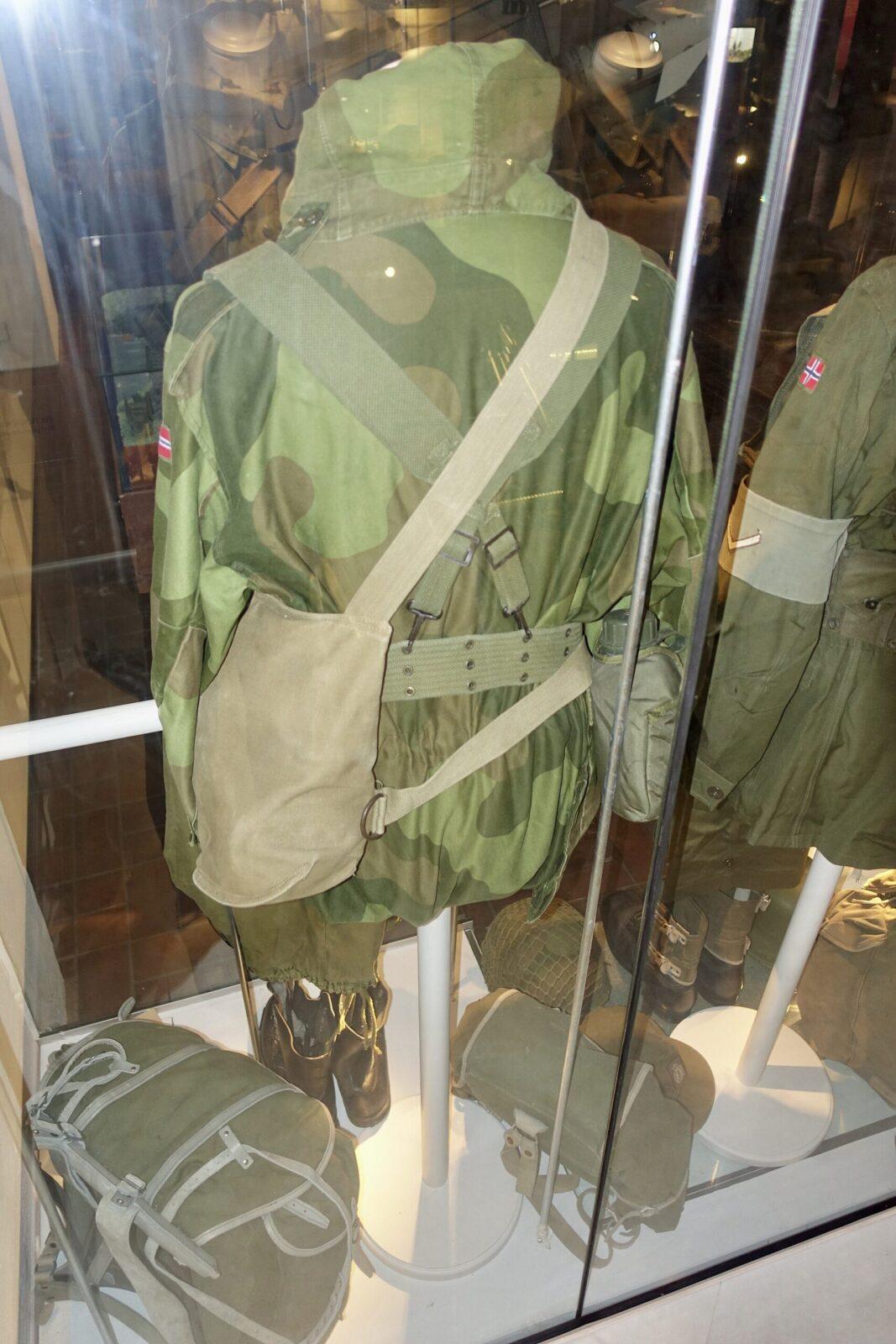
For about fifteen years the M75 was the Army’s standard wear, and the pattern that carried it served as the standard uniform until the early 1990s. Around 1985 a new work uniform, the M85, arrived with an olive-green shirt and trousers, which pushed the printed jacket further towards field use rather than everyday wear.
1998: the same drawing, a new cloth
In 1998 the Army introduced the M98 as its new work uniform, and this time the print covered both the jacket and the trousers. The change of model was not a change of design. Camouflage specialists who have examined both describe the M98 as a minor pattern and colour variation of the M75 rather than a new drawing, and the two are best understood as one pattern in two colourways.
Set side by side, the difference between them is tone rather than geometry. The M75 sample runs lighter and greener; the M98 sample reads darker and flatter, with the tan coming through drier. Norwegian sources record the drawing itself as approximately the same from the M75 through to the models of the 2010s, with the colour nuances changing from one uniform model to the next. In 2004 the M04 model kept the M98 print and moved to a lighter cotton cloth.
Anyone identifying the pattern from a single piece of kit should be careful. Shade differences appear across garments and across fabrics, and printed equipment belongs to the same family: chest rigs and pouches were produced with the print applied to Cordura, whose surface takes the colours differently from a cotton jacket or a pair of trousers.
Rock, forest and snow
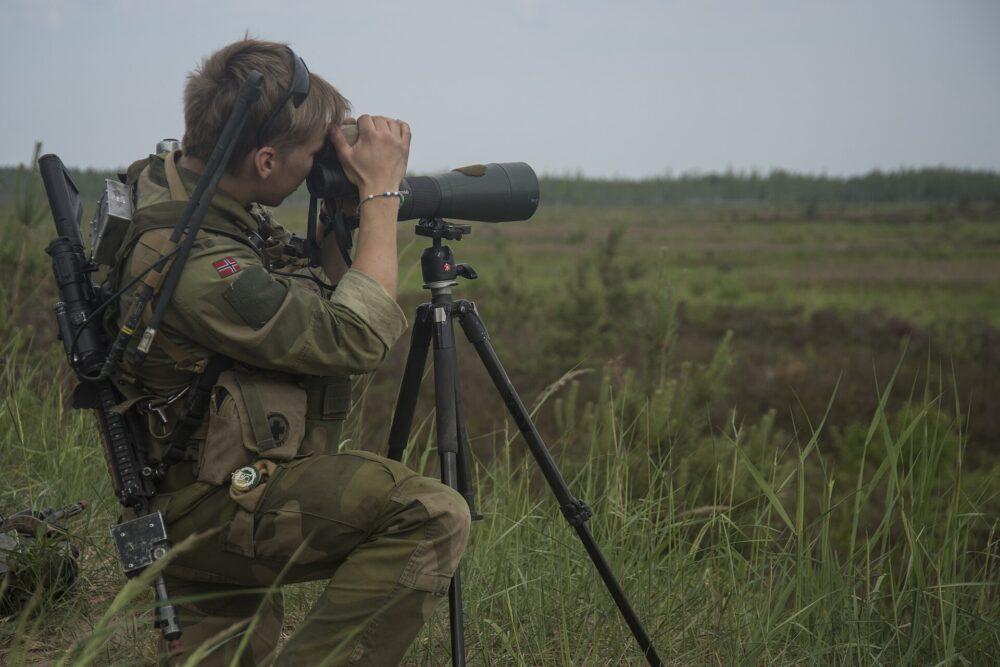
Norway asked a hard job of the print. Bare rock, birch and heath in the light months, conifer forest in the interior, and a long snow season across the north. The three-colour drawing answers the first two: its tan tone picks up dry grass, gravel and rock, while the two greens carry the ground between the trees. Snow has always been answered differently, by white over-garments worn on top of the uniform, from the hand-sewn suits of the 1940s to the white over-suits used on Arctic winter exercises. The forest print is the pattern of the ground that shows between the snow.
The pattern the country recognises
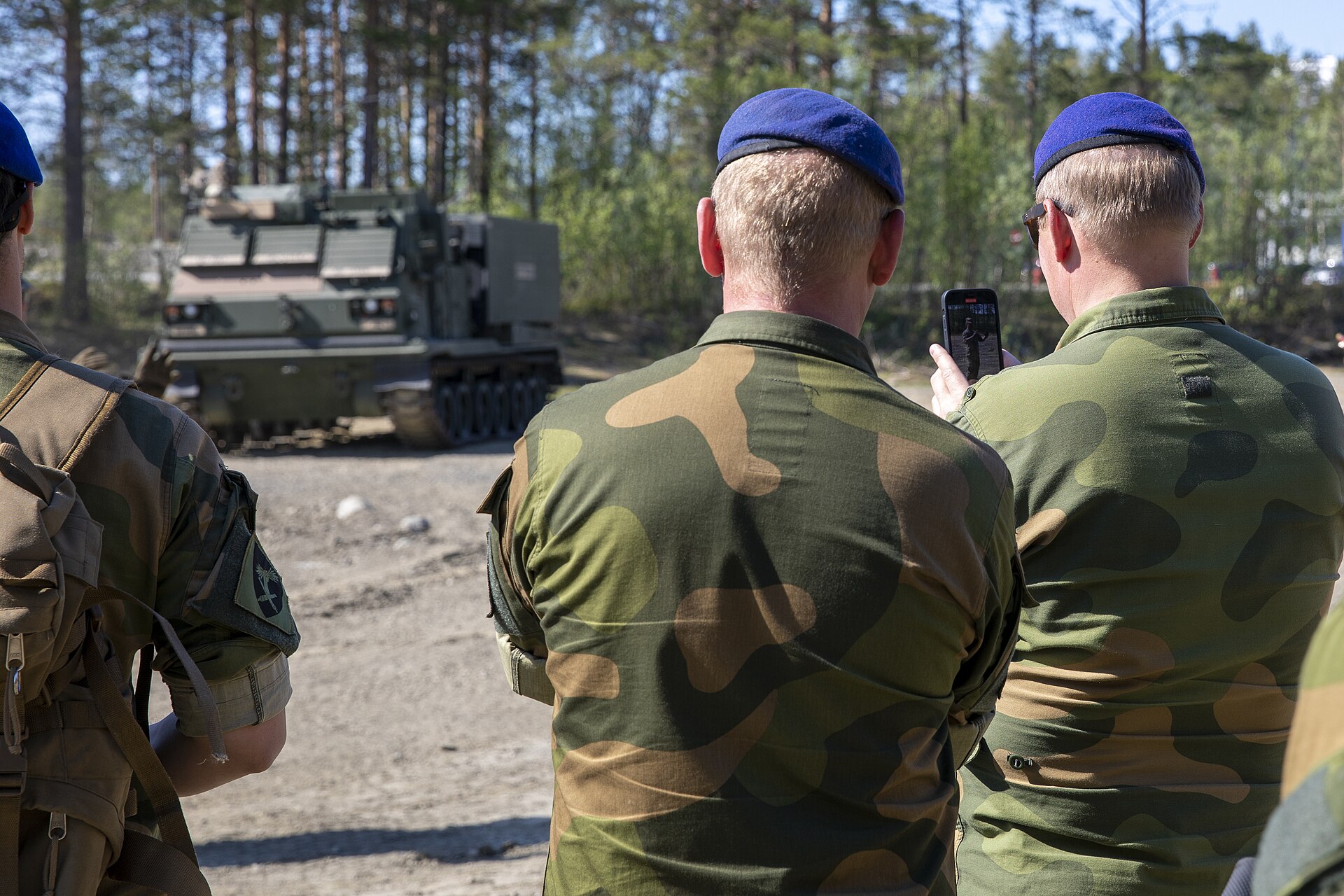
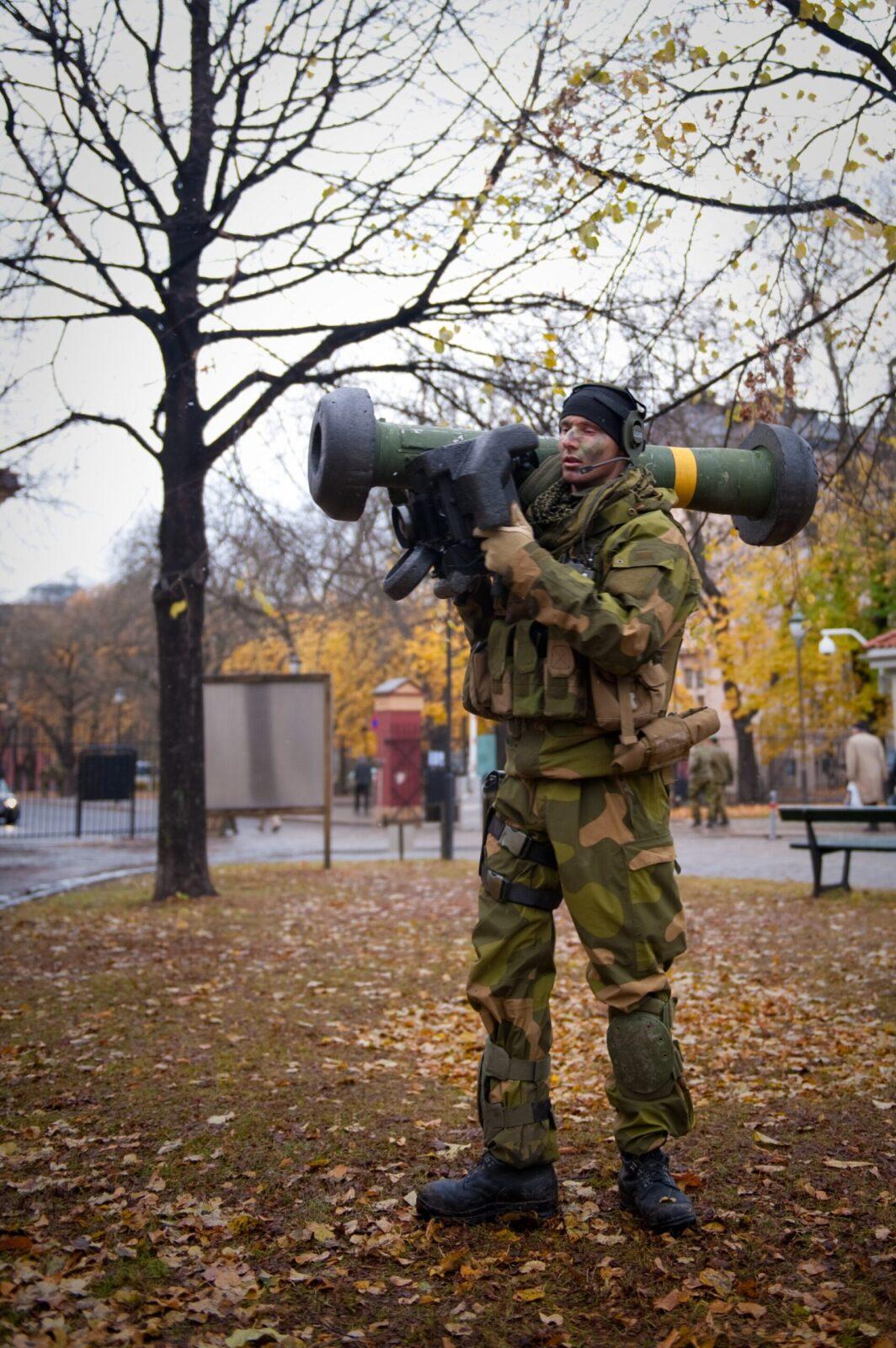
Because the same print was worn by the Army and by the Home Guard, and because Norwegian soldiers appear in it both at home and alongside allies, norsk skog has become one of the country’s visual signatures. It turns up at public events in Oslo, on exercises with allied battalions in the Baltic states and in Lithuania, and on the soldiers of Brigade Nord in the Arctic north.
The name outlived the drawing
The forest print did not disappear when the Army moved on. The armed forces have since adopted a new pattern, N08 Norsk skog, developed at the Norwegian Defence Research Establishment, with a separate print for overseas operations and, for winter, a patterned camouflage in place of plain white. The uniform system it belongs to, the Nordic Combat Uniform (M23), was announced in 2023 and first issued to troops in Finnmark in January 2025. Units still equipped with the older clothing continue to wear the three-colour print of 1975 and 1998 in the meantime.
Norwegian camouflage at MegaCamo
The Norwegian forest print is available on the Norwegian M98 Camouflage Fleece Hoodie, on the Norwegian M98 Camouflage O-Neck T-Shirt and on the M98 v2 O-Neck T-Shirt. The Norway collection gathers the country in one place, and the desert-coloured items of the same national family sit alongside: the M98 desert fleece hoodie, the M03 desert O-Neck T-Shirt and the M03 desert neck gaiter.
Further reading on the northern European family: Danish M84 Pletsloring, Swedish M90, Finnish M05, French Tundra and the Chasseurs Alpins for the snow and rock problem, and How camouflage is classified for the vocabulary of shapes, families and lineage.
Fifty years on, the Norwegian print remains a lesson in restraint: one drawing, three colours, two uniform generations, and no ambition to imitate the forest leaf by leaf.
